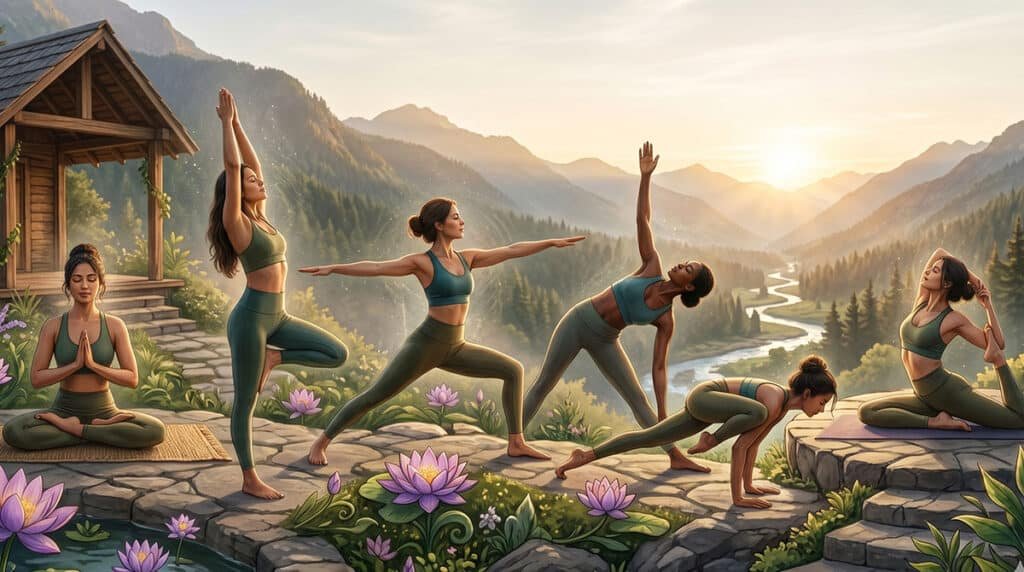
In the world of traditional yoga, not every sequence begins with the most advanced posture, nor does every practitioner follow the same path. Yoga is not random movement—it is an intelligent progression. This is where Vinyasa Krama becomes one of the most powerful concepts in advanced yoga education.
For students enrolled in an Advanced Yoga Teacher Training Course (YTTC), understanding Vinyasa Krama is essential. It goes beyond simply linking postures together. It teaches the art of sequencing, the science of progression, and the awareness needed to guide students safely and effectively.
At advanced levels of yoga training, Vinyasa Krama becomes a bridge between personal practice and professional teaching. It transforms a practitioner into a thoughtful teacher.
Let us explore what Vinyasa Krama truly means and why it holds such an important place in advanced yoga teacher training.
What is Vinyasa Krama?
The Sanskrit term Vinyasa Krama can be understood by breaking it into two parts:
- Vinyasa = conscious placement or intentional arrangement
- Krama = step-by-step progression
Together, Vinyasa Krama means the intelligent sequencing of yoga practices gradually and purposefully.
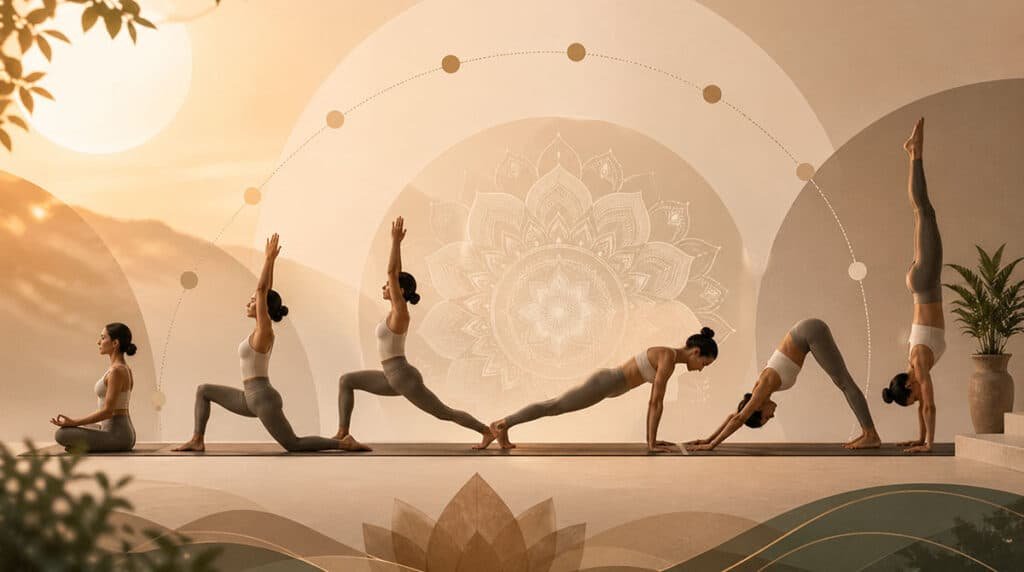
Unlike fast-paced modern “flow yoga,” traditional Vinyasa Krama focuses on moving systematically from simple to complex. Every asana, breath, and transition prepares the body and mind for the next step.
It is not about speed—it is about precision.
For example, before teaching deep backbends, a teacher prepares the spine with gentle warm-ups, shoulder opening, breath awareness, and strength-building postures. This thoughtful progression is Vinyasa Krama.
Why is Vinyasa Krama Important in Advanced YTTC?
In beginner-level yoga training, students often focus on performing postures correctly. In an Advanced Yoga Teacher Training Course, the focus shifts from “doing yoga” to “understanding how to teach yoga.”
This is where Vinyasa Krama becomes central.
Advanced trainees learn:
- how to structure safe yoga classes
- how to sequence postures based on body mechanics
- how to adapt practice for different student levels
- how to prevent injuries through intelligent progression
- how to use breath and awareness as part of sequencing
Without Vinyasa Krama, teaching can become mechanical. With it, teaching becomes therapeutic, intentional, and deeply effective.
The Core Principles of Vinyasa Krama
1. Start Where the Student Is
Every student has a different body, energy level, and experience. A skilled yoga teacher does not force everyone into the same practice.
Vinyasa Krama teaches teachers to assess students first and then guide them progressively.
This creates a safer and more inclusive yoga environment.
2. Move from Simple to Complex
The body must be prepared before attempting advanced postures.
For example:
- before headstand → shoulder stability and core activation
- before lotus pose → hip opening and knee safety
- before deep twists → spinal mobility and breath awareness
This progression is the foundation of intelligent yoga sequencing.
3. Breath Leads Movement
In traditional yoga sequencing, movement follows breath—not the other way around.
Breath awareness helps regulate the nervous system, improve concentration, and make the practice meditative rather than purely physical.
This principle is strongly emphasized in advanced yoga teacher training.
4. Counterpose and Recovery Matter
A complete sequence includes not just effort, but also recovery.
After intense backbends, forward folds may help restore balance. After inversions, grounding postures create stability.
Vinyasa Krama respects the body’s need for integration.
Vinyasa Krama vs Modern Vinyasa Flow
Many people confuse Vinyasa Krama with modern Vinyasa Flow classes.
They are related, but not the same.
Modern Vinyasa Flow
- often dynamic and fast-paced
- focused on continuous movement
- popular in fitness-based yoga spaces
Traditional Vinyasa Krama
- slower and more intentional
- focused on progression and preparation
- rooted in classical teaching methodology
In advanced YTTC, students study a deeper traditional understanding rather than only surface-level flow sequencing.
This creates stronger, more knowledgeable teachers.
How Vinyasa Krama is Taught in Advanced YTTC
A strong advanced yoga teacher training program includes Vinyasa Krama as both theory and practice.
Students are trained to design classes for:
- beginners
- intermediate practitioners
- advanced students
- prenatal yoga (where applicable)
- therapeutic yoga support
- senior practitioners
- pranayama preparation
- meditation readiness
They also learn how sequencing changes depending on the intention of the class:
- energising morning classes
- calming evening classes
- strength-building sessions
- restorative practices
- chakra-based sequencing
- spine health programs
This depth is what separates a certified teacher from a truly skilled one.
The Teacher’s Mindset in Vinyasa Krama
Vinyasa Krama is not just about sequence charts. It is also about observation.
A teacher must ask:
- Is the student breathing freely?
- Is the posture supporting or straining them?
- Is the sequence creating balance?
- Is the student ready for the next stage?
This awareness turns teaching into a living practice rather than a fixed routine.
Advanced yoga education helps cultivate this mindset.
Benefits of Learning Vinyasa Krama
For yoga teachers, the benefits are significant.
Safer Teaching
Students are guided with proper preparation, reducing the risk of strain and injury.
Better Class Design
Teachers learn how to create classes with purpose rather than random posture combinations.
Stronger Student Results
When sequences are intelligently designed, students experience better mobility, strength, focus, and emotional balance.
Deeper Confidence
Teachers no longer depend only on memorised sequences—they understand the “why” behind each posture.
This confidence is one of the biggest transformations in Advanced YTTC.
Vinyasa Krama as a Life Philosophy
Interestingly, Vinyasa Krama is not limited to yoga practice.
It reflects a powerful life principle:
progress step by step.
Growth does not happen through force. It happens through preparation, patience, and consistency.
Just as we do not jump into advanced postures without a foundation, we should not rush into life without readiness.
This philosophy makes yoga a lifelong path—not just a physical practice.
Learning Vinyasa Krama with Sayujya Yoga
For students seeking authentic and professional yoga education, Sayujya Yoga offers a strong foundation through its teacher training programs.
Sayujya Yoga is a Yoga Alliance-affiliated yoga institute based in Mumbai, offering structured teacher training programs, including a 200-hour teacher training course, 300-hour teacher training course and additional short yoga courses. The school focuses on helping students move beyond practice into teaching with clarity and confidence.
This makes it highly relevant for students who want to understand concepts like Vinyasa Krama in a deeper and more practical way.
Teacher training is not only about learning asanas—it is about understanding sequencing, alignment, philosophy, teaching methodology, and responsible instruction. Vinyasa Krama is a core part of that journey.
For aspiring yoga teachers who want to teach safely and meaningfully, choosing a school that values intelligent progression is essential. Sayujya Yoga supports this by offering training programs that help students become capable, confident, and conscious teachers.
If your goal is to move from practice to professional teaching, learning in the right environment matters.
Final Thoughts
Vinyasa Krama is one of the most valuable teachings in advanced yoga education because it reminds us that yoga is a process, not a performance.
It teaches patience over pressure, awareness over ambition, and intelligence over imitation.
For every serious yoga teacher, understanding Vinyasa Krama is not optional—it is foundational.
In an Advanced YTTC, this knowledge creates the difference between teaching poses and teaching transformation.
Because true yoga is never rushed.
It is built—step by step, breath by breath, with purpose.
That is the essence of Vinyasa Krama
Hardik Mehta
Hardik is an E-RYT 500 & YACEP (Yoga Alliance Continuing Education Provider), Yoga Alliance, USA. He has been practicing yoga for the last 9 years. Prior to finding his true calling in Yoga, he was working with various corporates for 12 years in the Retail and eCommerce sector.