
Difference Between Asana and Exercise
by Hardik Mehta

In today’s fitness-focused world, yoga is often placed in the same category as exercise. Both can improve strength, flexibility, mobility, balance, and overall physical health. Yet, asana and exercise are not exactly the same. While an asana may involve physical effort, its purpose extends beyond conditioning the body.
Understanding the difference between asana and exercise is especially important for yoga practitioners and aspiring teachers. In the yogic tradition, the body is not treated as an isolated physical structure. It is part of a larger relationship between body, breath, mind, awareness, and inner balance.
Asana is the third limb of Patanjali’s eight-limbed Yoga, and traditional interpretations emphasize steadiness and comfort rather than simply physical performance.
So, what really separates yoga asana vs exercise? Let’s explore.
What Is Asana in Yoga?
The Sanskrit word asana is commonly translated as posture or seat. In classical Yoga, its purpose was closely connected with developing steadiness and comfort in the body, particularly as preparation for meditation. Patanjali describes asana through the qualities of sthira (steadiness) and sukha (ease or comfort).
In modern yoga, asana includes a much wider range of postures such as:
- Tadasana
- Bhujangasana
- Trikonasana
- Virabhadrasana
- Paschimottanasana
- Sarvangasana
- Padmasana
These postures can certainly improve physical qualities such as mobility, flexibility, strength, coordination, and balance. However, the purpose of asana is not limited to physical fitness.
An asana is traditionally approached with awareness. The practitioner observes alignment, breath, sensations, effort, stability, and the state of the mind while holding or moving through a posture.
That mindful approach is one of the most important points when understanding asana vs. exercise.
What Is Physical Exercise?
Physical exercise generally refers to planned and structured physical activity performed to improve or maintain fitness and health.
Running, swimming, weight training, cycling, resistance training, and sports are common examples. Depending on the activity, exercise may focus on:
- Cardiovascular endurance
- Muscular strength
- Muscle growth
- Stamina
- Speed
- Power
- Agility
- Weight management
- Physical performance
Exercise can also contribute significantly to mental wellbeing. However, its primary structure is usually based around physical conditioning and measurable fitness outcomes.
This does not make exercise inferior to yoga. Rather, exercise and asana have different approaches and objectives.
Asana vs Exercise: What Is the Difference?
The distinction becomes clearer when we compare their purpose, approach, breathing, awareness, and relationship with effort.
1. Purpose and Intention
One of the biggest differences between asana and physical exercise is intention.
Exercise is commonly performed to improve a particular physical quality. Someone may run to improve cardiovascular endurance, lift weights to develop strength, or perform resistance exercises to build muscle.
Asana can also develop strength and flexibility, but the intention is broader. Traditional yoga treats the posture as part of a practice involving awareness and inner development.
Therefore, the same physical position can have a different meaning depending on how and why it is practiced.
A movement performed simply to challenge a muscle may be exercise. The same movement performed with conscious breathing, stability, awareness, and yogic intention can become part of an asana practice.
2. Focus on Body, Breath, and Mind
Exercise often concentrates primarily on the physical body.
Asana creates an opportunity to connect body, breath, and mind.
While holding a posture, a practitioner may observe:
- Is the body stable?
- Is the breath smooth?
- Where is unnecessary tension?
- Is the mind distracted?
- Can effort and relaxation coexist?
This inward observation is central to mindful yoga practice. Asana is therefore not simply about getting into a pose; it is also about developing awareness while being in it.
This is why educational resources on yoga often distinguish asana from conventional physical exercise by emphasizing the mindful quality of the practice.
3. Breathing Has a Different Role
Breathing is another important distinction.
During many forms of exercise, breathing naturally becomes faster as physical demand increases. The primary objective is generally to support the body’s increased demand for oxygen and energy.
In asana practice, breathing is deliberately observed and coordinated with movement or posture. The practitioner tries to maintain conscious, steady breathing rather than allowing the breath to become completely secondary to physical effort.
This connection between asana and breath awareness becomes even more significant when asana is practiced alongside pranayama and meditation.
4. Movement and Pace
Many conventional exercises involve repeated movements. For example, squats, push-ups, running, cycling, or resistance exercises involve repetition designed to progressively challenge the body.
Asana can involve movement too, particularly in dynamic yoga styles and transitions. However, many postures involve gradually entering a position, establishing alignment, holding it with awareness, and consciously releasing it.
Traditional discussions of asana therefore often distinguish its controlled, steady quality from repetitive physical conditioning.
This does not mean that all exercise is fast or that all yoga is slow. There are highly dynamic yoga practices, just as there are gentle forms of exercise. The more useful distinction is the intention and quality of awareness behind the movement.
5. Approach to Effort
Exercise often encourages progressive overload. The body is challenged beyond its familiar level so that it can gradually adapt and become stronger or more efficient.
Asana also involves effort, but yogic practice pays close attention to the relationship between effort and ease.
The goal is not necessarily to push harder every time.
Instead, practitioners learn to recognize the difference between:
- Useful effort and unnecessary strain
- Stability and rigidity
- Stretching and forcing
- Discipline and aggression
- Challenge and pain
This is particularly important for yoga teachers, because an advanced posture is not automatically a better posture.
A beginner performing a simple posture with excellent awareness may be practicing yoga more meaningfully than someone forcing an advanced pose without breath or attention.
6. External Performance vs Internal Awareness
Exercise often provides measurable goals: heavier weights, faster running times, longer distances, more repetitions, or greater endurance.
Asana can also have physical milestones, but the practice encourages a more internal form of observation.
Instead of asking only:
“How far can I go?”
the practitioner may ask:
“Can I remain steady and aware where I am?”
This shift is fundamental to understanding the difference between yoga and exercise.
Yoga does not necessarily reject physical achievement. It simply does not make physical achievement the entire purpose of practice.
7. The Role of the Mind
Physical movement can certainly influence mood and mental wellbeing. Exercise is widely valued for supporting psychological health and reducing stress.
In asana, however, mental awareness is deliberately integrated into the practice.
The practitioner may observe thoughts, emotional reactions, impatience, resistance, discomfort, and attachment to performance.
A posture therefore becomes a space for self-observation.
For example, if you are struggling in a balancing posture, the practice is not only about improving balance. It can also teach you how your mind responds when you lose balance.
Do you become frustrated?
Do you rush?
Do you hold your breath?
Do you immediately try again?
That awareness is part of the yogic learning process.
A Simple Comparison: Asana vs Exercise
|
Asana |
Physical Exercise |
|
Emphasizes body-mind awareness |
Primarily focuses on physical conditioning |
|
Breath is consciously observed |
Breathing generally supports physical exertion |
|
Stability and awareness are important |
Repetition and performance may be important |
|
Encourages balance between effort and ease |
Often emphasizes progressive physical challenge |
|
Can support preparation for meditation |
Usually targets specific fitness outcomes |
|
Encourages inward observation |
Often focuses on measurable external results |
|
Physical benefits are part of a broader practice |
Physical fitness is generally the central objective |
This comparison is a general framework, not an absolute rule. Yoga styles differ considerably, and many exercise systems also include mindfulness and breathwork.
Does Asana Count as Exercise?
This is where the answer becomes interesting: asana can provide exercise-like physical benefits, but it should not be reduced to exercise alone.
Certain asanas can challenge muscles, improve mobility, develop balance, and increase physical endurance. Dynamic yoga sequences can also create substantial physical demand.
At the same time, the traditional understanding of asana places importance on awareness, steadiness, breath, and preparation for deeper yogic practices.
So, instead of asking whether asana is exercise, it may be more useful to ask:
What is the intention behind the practice, and how is the body being used?
This perspective allows yoga and exercise to coexist rather than compete.
Can Yoga and Exercise Be Practiced Together?
Absolutely.
There is no need to choose one and reject the other.
Exercise can help develop cardiovascular fitness, strength, endurance, and athletic performance. Asana can complement this by encouraging mobility, body awareness, controlled breathing, balance, and mindful movement.
For a well-rounded lifestyle, both can have a place.
The key is understanding their different purposes and practicing each intelligently.
For yoga teachers, this distinction becomes even more important. A teacher should be able to explain not only how to perform a posture but also why it is being practiced and how it fits within the larger framework of yoga.
Why Understanding Asana vs Exercise Matters for Yoga Teachers
For someone completing a Yoga Teacher Training Course (YTTC), understanding this distinction goes beyond theory.
A yoga teacher may teach students who approach yoga expecting a workout. Others may be interested in flexibility, stress management, meditation, or a deeper understanding of yogic philosophy.
A knowledgeable teacher can create a practice that respects these different motivations while remaining grounded in the principles of yoga.
Understanding asana, exercise, pranayama, meditation, and yoga philosophy as interconnected but distinct elements also helps teachers communicate more responsibly.
It encourages students to move away from the idea that yoga is simply a collection of impressive poses.
Instead, the mat becomes a place to develop awareness, discipline, steadiness, and a deeper relationship with oneself.
Learn the Deeper Meaning of Asana with Sayujya Yoga
The distinction between asana and exercise reflects a broader idea: yoga is more than physical movement.
At Sayujya Yoga, this holistic perspective is relevant to its Yoga Teacher Training Programs, where students explore yoga beyond posture practice.
Its advanced teacher training curriculum brings together asana, pranayama, mudra, bandha, meditation, yoga philosophy, anatomy, physiology, teaching methodology, sequencing, and therapeutic applications.
This makes the topic of asana vs exercise particularly relevant for aspiring yoga teachers. Understanding the distinction helps practitioners teach with greater clarity and prevents yoga from being reduced to simply another fitness routine.
When students understand the purpose behind a posture, their practice can move from merely doing yoga poses toward genuinely experiencing yoga.
The difference between asana and exercise is not simply about whether the body moves quickly or slowly. It is fundamentally about intention, awareness, breath, effort, and the relationship between body and mind.
Exercise primarily seeks to improve physical fitness and performance, while asana belongs to a broader yogic framework that can use physical postures as a means of cultivating steadiness, awareness, and inner balance.
Both practices have value. The real learning begins when we understand that they do not have to be placed in opposition.
Exercise trains the body. Asana invites us to experience the body with awareness.
And that difference is an important foundation for anyone who wants to move from simply practising yoga to truly understanding and teaching it.
About the Author
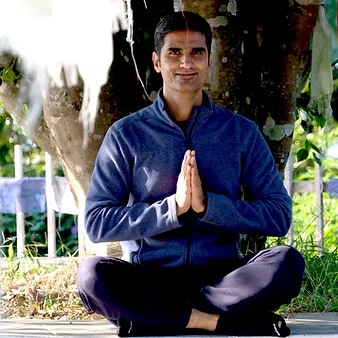
Hardik Mehta
Hardik is an E-RYT 500 & YACEP (Yoga Alliance Continuing Education Provider), Yoga Alliance, USA. He has been practicing yoga for the last 9 years. Prior to finding his true calling in Yoga, he was working with various corporates for 12 years in the Retail and eCommerce sector.