
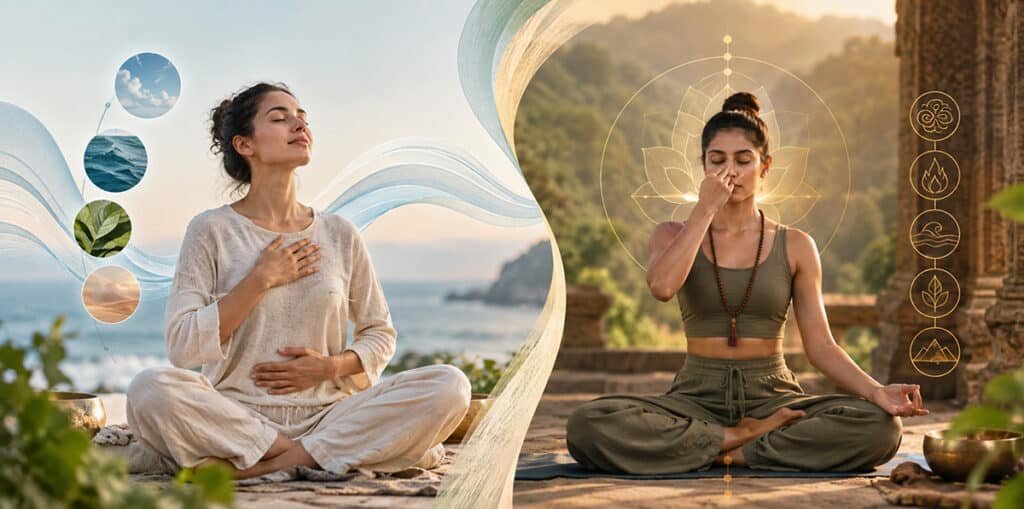
Breathing is something we do every moment, yet most of us rarely pay attention to how we breathe. In yoga and modern wellness practices, conscious breathing has become an important way to support relaxation, focus, emotional balance, and overall well-being. This has also led to the growing popularity of breathwork and pranayama.
Although these terms are sometimes used interchangeably, breathwork and pranayama are not exactly the same. They share a common foundation—using the breath consciously—but their origins, philosophy, techniques, intentions, and methods of practice can differ significantly.
Understanding the difference between breathwork and pranayama is particularly important for yoga students and future yoga teachers. Knowing what distinguishes the two allows practitioners to approach breathing practices with greater awareness and respect for their traditional roots.
What Is Breathwork?
Breathwork is a broad term used to describe intentional breathing practices designed to influence physical, mental, or emotional states.
Modern breathwork can include many different techniques. Some practices focus on slowing the breath and encouraging relaxation, while others use specific breathing patterns to increase alertness, release emotional tension, improve concentration, or create a deeper sense of body awareness.
Because breathwork is a broad category, there is no single technique that defines it.
Some contemporary breathwork practices may involve:
- Slow and conscious breathing
- Rhythmic breathing patterns
- Deep diaphragmatic breathing
- Breath retention
- Connected or continuous breathing
- Breath awareness exercises
- Breathing practices used for relaxation or stress management
The intention behind a particular breathwork method can vary greatly depending on the teacher and the tradition from which the technique comes.
In modern wellness spaces, breathwork is often presented as a practical tool for managing stress, improving self-awareness, and developing a healthier relationship with one’s breathing.
What Is Pranayama?
Pranayama is the traditional yogic discipline of conscious breath regulation.
The Sanskrit term is commonly associated with prana, often understood as vital energy or life force, and ayama, referring to expansion, regulation, or extension. Therefore, pranayama is not simply about breathing more deeply. It is a traditional yogic practice concerned with the relationship between breath, prana, mind, and consciousness.
Pranayama has an established place within the classical yoga tradition. In Patanjali’s Yoga Sutras, pranayama is described as a limb of yoga following asana and preceding practices associated with deeper inward awareness.
Traditional pranayama includes carefully structured techniques such as:
- Nadi Shodhana
- Anulom Vilom
- Bhramari
- Ujjayi
- Sheetali
- Sheetkari
- Surya Bhedana
- Chandra Bhedana
- Various forms of kumbhaka, or breath retention
These practices are traditionally approached with attention to posture, breathing mechanics, rhythm, awareness, preparation, and the practitioner’s individual capacity.
This makes pranayama much more than a collection of breathing exercises. It is part of a larger yogic framework.
Breathwork vs Pranayama: What Is the Main Difference?
The simplest way to understand the difference between breathwork and pranayama is to look at their context and purpose.
Breathwork is a broad modern umbrella covering intentional breathing practices from different approaches and traditions. Pranayama, on the other hand, is specifically rooted in the yogic tradition.
However, the distinction is not always absolute. Some contemporary breathwork techniques are inspired by traditional pranayama, while some yoga teachers may use the word “breathwork” when explaining pranayama to modern audiences.
The important difference is context, methodology, philosophy, and lineage.
1. Difference in Origin
One of the clearest distinctions is their historical background.
Pranayama originates within the yoga tradition and has developed through centuries of yogic teachings and practices.
Breathwork, as the term is commonly used today, is much broader. Modern breathwork can draw inspiration from yoga, meditation, somatic practices, therapeutic approaches, sports training, and other systems.
Therefore, not every breathwork technique is pranayama.
2. Difference in Philosophy
Traditional pranayama is connected to the yogic understanding of prana and the mind.
The practice is not only concerned with changing the physical breathing pattern. It can also be used as preparation for meditation and deeper states of awareness.
Modern breathwork often focuses more directly on a particular practical outcome, such as relaxation, emotional processing, focus, energy, or stress management.
This does not make one approach better than the other. They simply operate within different frameworks.
3. Difference in Technique
Breathwork techniques can range from extremely simple breathing exercises to intense and highly structured practices.
Pranayama generally follows specific traditional principles concerning:
- Inhalation (puraka)
- Exhalation (rechaka)
- Retention (kumbhaka)
- Rhythm
- Breath ratio
- Nasal breathing
- Body position
- Awareness
- Gradual progression
For example, Nadi Shodhana pranayama involves a structured pattern of alternate-nostril breathing. The practice is not simply “breathing through different nostrils”; it is traditionally taught within a specific yogic framework.
4. Difference in Purpose
The purpose of breathwork depends on the particular method being practiced.
Someone may use modern breathwork to calm the nervous system, increase awareness, support relaxation, or explore emotional experiences.
Pranayama can also support calmness and concentration, but traditionally its purpose extends further into the yogic path, including preparing the mind for meditation and cultivating awareness of prana.
Thus, the intention behind the practice is an important part of understanding the difference.
Are Breathwork and Pranayama the Same?
No—but there is considerable overlap.
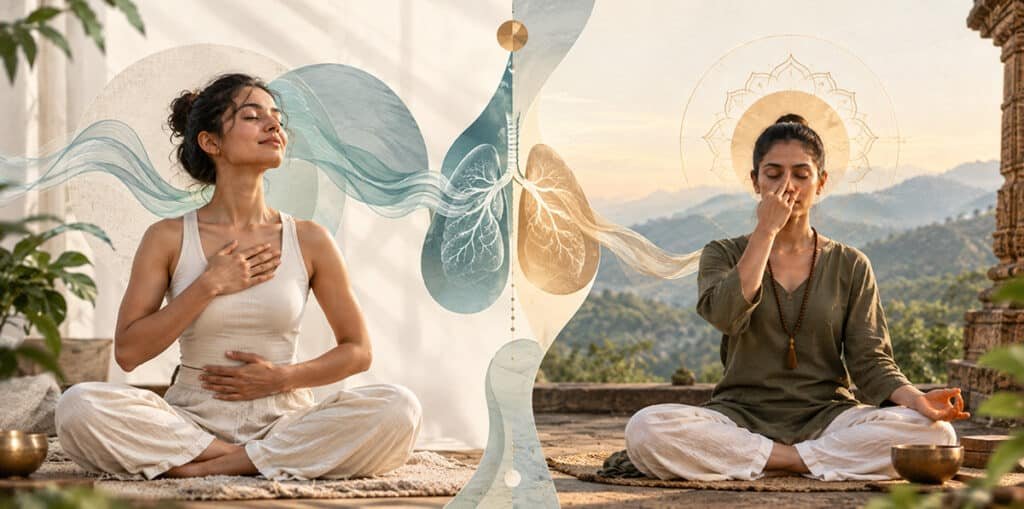
Think of breathwork as a broad category and pranayama as a specific traditional discipline within the wider world of conscious breathing practices.
This distinction becomes especially useful when studying yoga more deeply.
For example, saying that every pranayama technique is simply “breathwork” may technically communicate that it involves conscious breathing, but it can remove the philosophical and traditional context that makes pranayama unique.
Similarly, assuming that every modern breathwork technique is pranayama can incorrectly associate contemporary practices with the classical yoga tradition.
For yoga practitioners, understanding this difference encourages a more informed approach.
Benefits of Conscious Breathing Practices
Whether someone practices breathwork or pranayama, conscious breathing can encourage greater awareness of the breath and body.
Depending on the technique and how it is practiced, breathing practices may support:
Greater Relaxation
Slow, controlled breathing can encourage a calmer state and help practitioners become more aware of unnecessary tension.
Improved Breath Awareness
Many people breathe automatically without noticing their breathing patterns. Conscious breathing brings attention to the rhythm, depth, and quality of the breath.
Better Concentration
Certain pranayama practices are traditionally used to cultivate steadiness and prepare the mind for meditation.
Emotional Awareness
Breathing is closely connected to our experience of stress and emotion. Conscious breathing can help practitioners notice how their breath changes with different mental states.
Deeper Mind-Body Connection
Both modern breathwork and traditional pranayama can encourage practitioners to become more aware of the relationship between physical sensations, breathing, thoughts, and attention.
However, breathing practices are not one-size-fits-all. Intensity, duration, breath retention, and technique should be appropriate for the individual. Advanced techniques are best learned under qualified guidance, particularly when they involve prolonged retention or strong breathing patterns.
Why Understanding This Difference Matters for Yoga Teachers
For someone studying yoga only for personal practice, knowing the difference between breathwork and pranayama can improve understanding.
For a future yoga teacher, it becomes even more important.
A yoga teacher needs to understand not only how to demonstrate a breathing technique but also:
- Where the practice comes from
- Why it is being taught
- How it should be introduced
- Which students may need modifications
- How to explain the technique clearly
- How it fits into a broader yoga practice
Teaching pranayama responsibly means respecting its traditional foundations while also understanding the needs of modern students.
This is why deeper study of pranayama can become an important part of advanced yoga education.
Breathwork or Pranayama: Which Should You Practice?
There is no universal answer.
If your interest is in exploring different contemporary approaches to conscious breathing, breathwork offers a broad range of practices.
If you want to understand breathing through the traditional yogic lens, pranayama offers a more structured and philosophical path.
For yoga students, learning both concepts can be valuable—as long as the distinction between them is maintained.
Rather than asking which one is “better,” a more useful question is:
What is the purpose of the practice, where does it come from, and how should it be practiced?
That question encourages mindfulness rather than simply collecting breathing techniques.
Learning Breathwork and Pranayama Through Yoga Education
For students progressing beyond basic asana practice, pranayama opens the door to a much deeper understanding of yoga.
At an advanced level, the focus can move beyond simply performing a posture or copying a breathing pattern. Students begin to explore why a practice is performed, how it affects awareness, and how different yogic practices connect with one another.
This is particularly relevant for aspiring yoga teachers, because teaching requires more than personal familiarity with a technique. It requires understanding, observation, appropriate sequencing, and the ability to communicate the practice responsibly.
How Sayujya Yoga Connects With This Topic
Sayujya Yoga, one of the best yoga institute in Mumbai, offers a teachers’ training program for students who want to develop a deeper and more structured understanding of yoga.
The difference between breathwork and pranayama is an excellent example of why comprehensive yoga education matters. A practitioner may know how to perform a breathing exercise, but deeper teacher training encourages students to understand its traditional context, methodology, purpose, and place within the broader practice of yoga.
For students exploring advanced yoga education, studying pranayama alongside asana, meditation, philosophy, and other components of yoga can help build a more complete foundation for teaching.
As pranayama continues to be an important subject in yoga education, understanding how it differs from the broader modern concept of breathwork allows future teachers to communicate these practices with greater clarity and authenticity.
Final Thoughts
The difference between breathwork and pranayama is ultimately about more than terminology.
Both involve conscious engagement with the breath, but they can differ in origin, philosophy, methodology, purpose, and teaching context. Breathwork is a broad and evolving category, while pranayama belongs specifically to the traditional yogic system.
For anyone beginning or deepening their yoga journey, understanding this distinction can bring greater appreciation to the practice.
The breath may be universal, but the way we work with it can carry very different intentions.
And when studied with awareness, patience, and proper guidance, conscious breathing can become much more than a technique—it can become a meaningful part of the journey toward greater steadiness, awareness, and inner balance.
Hardik Mehta
Hardik is an E-RYT 500 & YACEP (Yoga Alliance Continuing Education Provider), Yoga Alliance, USA. He has been practicing yoga for the last 9 years. Prior to finding his true calling in Yoga, he was working with various corporates for 12 years in the Retail and eCommerce sector.