

Yoga is often associated with physical postures, mindful breathing, meditation, and flexibility. Yet, behind these practices lies a rich philosophical tradition that explores consciousness, self-realisation, discipline, and the relationship between the individual and the universe. One of the most significant figures associated with this tradition is Shiva, revered in many yogic traditions as Adiyogi—the first yogi.
For thousands of years, Shiva has represented much more than a deity within the yogic imagination. He is seen as an archetype of the yogi: inwardly still, deeply aware, detached from worldly distractions, and established in higher consciousness. His symbolism provides valuable insight into what yoga means beyond the physical practice.
The significance of Shiva in yoga tradition is therefore an important subject for anyone seeking to understand the deeper dimensions of yoga. It is also a fascinating area of study in advanced yoga education, where practitioners move beyond asana to explore yoga philosophy, meditation, subtle anatomy, and traditional yogic texts.
Who Is Shiva in the Yoga Tradition?
Shiva is one of the most important figures in Indian spiritual traditions, but his role differs across philosophical and religious schools. Within yoga traditions, he is frequently portrayed as the archetypal yogi and a source of yogic knowledge.
The Sanskrit name Shiva is commonly associated with meanings such as “auspicious” or “benign.” Traditional yoga literature and later yogic traditions have used Shiva as a model of the accomplished yogi—one who has moved beyond ordinary identification with the body and mind.
This is why images of Shiva often show him seated in deep meditation, with a calm expression and an inward gaze. The image is not merely devotional. It represents qualities that yoga practitioners are encouraged to cultivate: stillness, awareness, discipline, detachment, and inner transformation.
In this sense, studying Shiva in yoga philosophy can help practitioners understand that yoga is not simply about performing challenging postures. It is about transforming the way we experience ourselves and the world.
Shiva as Adiyogi: The First Yogi
One of the most widely known associations of Shiva with yoga is the concept of Adiyogi, meaning the “first yogi.”
According to yogic tradition, Shiva is regarded as the original source of yogic knowledge. Stories surrounding Adiyogi describe him as having transmitted profound knowledge of yoga to the first disciples, establishing a lineage of teachings that would eventually develop into diverse yogic paths.
It is important to understand this as a traditional account rather than a straightforward historical claim about a single identifiable founder of all yoga. Yoga developed over long periods through numerous teachers, texts, philosophical schools, and practices.
Nevertheless, the symbolism of Shiva as Adiyogi remains extremely important. It represents the idea that yoga is fundamentally a technology of inner transformation rather than merely a physical discipline.
The modern understanding of yoga also needs to be viewed within this broader historical context. Classical and medieval yoga traditions placed considerable emphasis on practices such as meditation, pranayama, concentration, and spiritual discipline, while asana was only one component of larger systems.
Shiva and the Deeper Purpose of Yoga
What does Shiva have to teach a modern yoga practitioner?
Perhaps the most important lesson is inner stillness.
Modern life constantly encourages movement. We move from one task to another, consume information continuously, and often remain mentally active even when our bodies are resting. The traditional image of Shiva presents the opposite possibility: the ability to remain still while maintaining profound awareness.
This connects beautifully with the deeper objectives of yoga.
Patanjali’s Yoga Sutras describe yoga through a systematic framework involving ethical discipline, physical practice, breath regulation, withdrawal of the senses, concentration, meditation, and samadhi.
From this perspective, yoga is a progressive journey inward.
Shiva’s meditative form can therefore be understood as a symbolic representation of the yogic state in which the fluctuations of the mind become quiet and awareness becomes more established.
The Symbolism of Shiva for Yoga Practitioners
Shiva’s traditional imagery contains numerous symbols, each of which can be contemplated from a yogic perspective.
1. Shiva’s Meditation
The meditating form of Shiva represents dhyana, or meditation.
For a yoga practitioner, meditation is not simply an exercise in relaxation. It involves cultivating sustained awareness and developing a deeper relationship with the mind.
Shiva’s stillness reminds practitioners that yoga eventually moves beyond movement.
2. The Third Eye
Shiva’s third eye is one of his most recognisable symbols. In a yogic context, it can be contemplated as a representation of higher perception and inner awareness.
Rather than seeing only through the senses, yoga encourages practitioners to develop the capacity for observation and discernment.
This makes the symbolism particularly relevant to meditation and self-inquiry.
3. The Ganga
The river Ganga flowing from Shiva’s matted hair is another powerful image from Indian tradition. Symbolically, it can be contemplated as the descent and movement of transformative knowledge and spiritual energy.
For practitioners, it offers an opportunity to reflect on the relationship between knowledge, purification, and consciousness.
4. The Serpent
The serpent around Shiva’s neck is often interpreted through several layers of symbolism. In yogic traditions, serpentine imagery is also strongly associated with kundalini, the subtle spiritual power described in tantric and hatha yoga traditions.
Kundalini traditions describe a dormant potential associated with the subtle body, while practices involving breath, concentration, meditation, mudra, and other techniques are traditionally used within specific systems to work with this energy.
This should not be reduced to a purely physical or literal concept. It belongs to a sophisticated symbolic and philosophical framework within particular yoga traditions.
Shiva, Shakti and the Principle of Balance

The relationship between Shiva and Shakti is particularly significant in tantric and hatha yoga traditions.
Shiva is commonly associated with consciousness, while Shakti represents dynamic creative power. Their relationship illustrates the interaction between stillness and movement, awareness and energy, consciousness and manifestation.
This symbolism can be especially meaningful for yoga practitioners.
A yoga practice requires both qualities. There is movement, but there is also awareness. There is effort, but there is also surrender. There is discipline, but there is also receptivity.
Hatha yoga traditions have historically drawn upon this relationship between Shiva and Shakti in their understanding of transformation. Traditional sources such as the Shiva Samhita belong to the broader body of texts associated with classical hatha yoga.
Thus, the study of Shiva can help practitioners understand yoga as a practice of integration rather than separation.
Shiva and Hatha Yoga
The connection between Shiva and Hatha Yoga is particularly interesting for advanced practitioners.
Several traditional accounts connect Shiva with the transmission of yogic teachings, while later hatha yoga traditions developed through various teachers and lineages. Goraksha, for example, became one of the most influential figures associated with the development of hatha yoga, and traditional narratives connect his lineage with Shiva.
Classical hatha yoga was not simply a fitness system. Its physical techniques were connected with purification, pranayama, concentration, meditation, and spiritual transformation.
This historical perspective is important today because it allows practitioners to look beyond the modern idea of yoga as primarily exercise.
Asana prepares the body, pranayama refines the breath, concentration steadies the mind, and meditation turns awareness inward.
Shiva, as the archetypal yogi, represents this deeper journey.
What Can Modern Yoga Practitioners Learn From Shiva?
The relevance of Shiva is not limited to religious or historical study. His symbolism can inspire practical qualities within a contemporary yoga practice.
Cultivate Stillness
Not every practice needs to be physically intense. Learning to sit, observe, breathe, and remain present is equally valuable.
Develop Detachment
Detachment in yoga does not mean becoming indifferent to life. It can mean learning to observe thoughts and emotions without being completely controlled by them.
Practice Self-Inquiry
Yoga invites practitioners to explore a fundamental question: Who am I beyond my body, thoughts, roles, and habits?
Shiva’s meditative symbolism encourages this inward exploration.
Balance Effort and Ease
Yoga is neither constant effort nor complete passivity. A balanced practice requires both discipline and surrender.
Move Beyond the Physical
The physical practice can become a doorway into pranayama, meditation, philosophy, mantra, self-study, and deeper awareness.
This is one of the most valuable lessons when studying Shiva and yoga philosophy.
Why Shiva Is Relevant in Advanced Yoga Teacher Training
For students pursuing an Advanced Yoga Teacher Training Course (YTTC), understanding Shiva can provide a broader philosophical foundation for teaching yoga.
An advanced teacher is not only expected to know how to demonstrate an asana. A deeper understanding involves exploring yoga philosophy, traditional texts, meditation, pranayama, subtle anatomy, and the historical development of yoga.
Studying Shiva within this framework encourages teachers to ask important questions:
- What is the deeper purpose of yoga?
- How are physical practices connected with inner transformation?
- What does meditation contribute to the yogic path?
- How do traditional symbols communicate philosophical ideas?
- How can ancient teachings be presented responsibly to modern students?
These questions help transform yoga teaching from simply demonstrating postures into facilitating a more complete understanding of the yogic tradition.
Explore Traditional Yoga Wisdom with Sayujya Yoga
For practitioners who want to explore the philosophical and traditional dimensions of yoga more deeply, Sayujya Yoga offers a strong connection between classical yogic wisdom and contemporary yoga education.
Its teacher training programs include the study of yoga philosophy and traditional sources alongside practical components. The Advanced Holistic Yoga Teacher Training curriculum, for example, incorporates areas such as philosophy, anatomy, physiology, pranayama, mudra, bandha, meditation, pedagogy, sequencing, and other dimensions of yoga education.
The curriculum also explores texts and subjects including the Yoga Sutra, Bhagavad Gita, Principal Upanishads, Ayurveda, and Yoga Rahasya, creating an environment where students can study yoga beyond its physical dimension.
This makes the significance of Shiva in yoga tradition particularly relevant to advanced yoga education. Understanding figures such as Shiva, along with the philosophies and texts connected with yoga, can help aspiring teachers develop a more grounded understanding of the tradition they teach.
You can explore Sayujya Yoga’s teacher training offerings at Sayujya Yoga.
The significance of Shiva in yoga tradition extends far beyond the image of a deity sitting in meditation. Shiva represents the archetype of the yogi—one who seeks stillness, awareness, discipline, detachment, and deeper knowledge.
As Adiyogi, Shiva symbolises the ancient yogic aspiration to move from external identification toward inner awareness. His symbolism—from the third eye and serpent to meditation and the relationship between Shiva and Shakti—offers practitioners multiple ways to contemplate the deeper meaning of yoga.
For a modern practitioner, the greatest lesson may be simple: yoga is not only about how the body moves; it is also about how awareness evolves.
And for students of advanced yoga, studying Shiva can open an important doorway into the philosophy, symbolism, history, and spiritual dimensions that have shaped the yogic tradition.
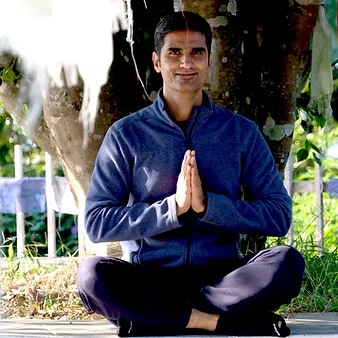
Hardik Mehta
Hardik is an E-RYT 500 & YACEP (Yoga Alliance Continuing Education Provider), Yoga Alliance, USA. He has been practicing yoga for the last 9 years. Prior to finding his true calling in Yoga, he was working with various corporates for 12 years in the Retail and eCommerce sector.