

When most people hear the word yoga, they imagine a sequence of physical postures—stretching, balancing, strengthening, twisting, and perhaps ending with Savasana. Because of this modern image, yoga is often placed in the same category as gym workouts, Pilates, or other forms of physical exercise.
But is yoga really a workout?
The answer depends on what we mean by yoga.
Asana, the physical practice of yoga postures, can certainly strengthen the body, improve mobility, develop balance, and increase body awareness. However, reducing yoga to a workout overlooks the much larger system from which asana comes. In the classical framework of Patanjali, asana is only one of the eight limbs of yoga, alongside yama, niyama, pranayama, pratyahara, dharana, dhyana, and samadhi.
This distinction is especially important for anyone studying yoga seriously. In an Advanced Yoga Teacher Training Course (YTTC), the goal is not simply to perform postures better, but to understand why they are practiced, how they influence the body and mind, and how they fit into the larger yogic path.
So, if yoga is not simply a workout, what is it?
What Is the Difference Between Yoga and a Workout?
A workout generally has a primary physical objective. It may aim to build muscular strength, improve cardiovascular fitness, increase endurance, develop speed, or support a particular physical goal.
Yoga can include many of these physical benefits, but its purpose is broader.
A yoga practice may ask you to notice:
- How you breathe
- How your body feels
- Where you hold tension
- How your mind reacts to difficulty
- Whether you are forcing or observing
- How you respond to discomfort
- Whether you can remain present
This changes the nature of movement.
Instead of asking only, “How many calories did I burn?”, yoga encourages questions such as, “What am I experiencing?” and “What am I learning about myself?”
That is one of the fundamental differences between yoga and exercise.
Exercise can certainly be mindful, and yoga can certainly be physically demanding. The difference is not simply intensity. It is the intention, awareness, and framework surrounding the practice.
Asana Is Only One Part of Yoga
One of the biggest reasons yoga is mistaken for a workout is that asana is the most visible part of modern yoga.
You can see a person performing Trikonasana, Adho Mukha Svanasana, Virabhadrasana, or Sirsasana. You can observe flexibility, balance, strength, and alignment.
But you cannot immediately see concentration, self-observation, breath awareness, or inner discipline.
According to the eight-limbed framework of Patanjali, asana is one limb among eight. The broader system includes ethical principles, personal observances, physical postures, breath regulation, withdrawal of the senses, concentration, meditation, and samadhi.
This means that yoga cannot be fully understood by looking only at the physical body.
Asana is yoga, but yoga is not only asana.
The physical practice can become a doorway into deeper awareness.
Yoga Works With the Body, Breath and Mind
A conventional workout may primarily focus on the body. Yoga creates an opportunity to connect the body, breath, and mind.
Consider what happens during a challenging posture.
Your muscles may become active. Your breathing may change. Your mind may want to leave the posture. You may feel impatience, fear, competition, or frustration.
Instead of immediately reacting, yoga teaches you to observe.
Can you maintain steady breathing?
Can you soften unnecessary tension?
Can you remain aware without becoming overwhelmed?
Can you recognise your limits without judging yourself?
This is where the practice moves beyond physical conditioning.
Pranayama, for example, introduces conscious regulation and awareness of the breath, while meditation and concentration practices turn attention more directly toward the mind. A complete yogic approach therefore extends well beyond physical movement.
Yoga Is Not About How Much You Can Do
Modern fitness culture can sometimes encourage comparison.
Who can lift more?
Who can run faster?
Who can hold a plank longer?
Who can perform the most advanced yoga pose?
When yoga becomes a competition, its deeper purpose can easily get lost.
A person who can place their foot behind their head is not necessarily “better at yoga” than someone who practices a simple seated posture with complete awareness.
In yoga, quality of awareness can matter more than complexity of movement.
A simple Tadasana practiced with attention can teach you something about posture, breath, balance, grounding, and awareness. A challenging posture performed without attention can become little more than a physical shape.
This is why yoga for mind and body is fundamentally different from treating every session as a performance.
The Role of Breath in Yoga
One of the clearest distinctions between yoga and a conventional workout is the importance given to breath.
During exercise, breathing often responds naturally to increasing physical demand. In yoga, the breath can become an object of observation and practice in itself.
Asana may be coordinated with breathing. Pranayama may deliberately regulate the breath. Meditation may use breath awareness to cultivate concentration.
The breath therefore becomes a bridge between physical and mental practice.
A practitioner may begin by becoming aware of the movement of the breath and gradually become more aware of the movement of the mind.
This is why yoga breathing techniques and pranayama are not simply optional additions to make a physical class feel more “yogic.” They represent a deeper dimension of the traditional practice.
Yoga Teaches You How to Relate to Yourself

Perhaps one of the most important reasons yoga is more than exercise is that it changes the relationship you have with yourself.
Imagine holding a posture that feels uncomfortable.
One response might be:
“I need to push harder.”
Another might be:
“I cannot do this.”
Yoga creates a third possibility:
“Let me observe what is happening.”
That small shift can be powerful.
You begin noticing the difference between discomfort and pain, effort and force, discipline and aggression, acceptance and resignation.
This kind of awareness does not disappear when you leave the yoga mat.
It can influence how you respond to stress, relationships, work, challenges, and everyday situations.
That is why yoga can become a way of living, rather than simply something you do for an hour.
Yoga Does Have Physical Benefits—But That Is Not the Whole Story
Saying that yoga is not a workout does not mean that yoga does not exercise the body.
Certain yoga practices can improve:
- Strength
- Flexibility
- Mobility
- Balance
- Coordination
- Postural awareness
- Physical stability
- Body awareness
The physical benefits are real and valuable.
However, these benefits should not be mistaken for the entire purpose of yoga.
A well-rounded yoga practice can simultaneously involve physical movement, breath awareness, concentration, self-study, and meditation. Traditional frameworks place these elements within a much broader system of practice.
So rather than saying “yoga does not exercise the body,” it is more accurate to say:
Yoga is not limited to exercising the body.
Why This Understanding Matters for Yoga Teachers
This distinction becomes particularly important when learning how to teach yoga.
A teacher who understands yoga only as a collection of poses may focus primarily on alignment, sequencing, flexibility, and physical achievement.
A teacher with a deeper understanding can ask:
- Why am I teaching this asana?
- What is the intention of this sequence?
- How does the breath support the practice?
- What preparation does the student need?
- How can this practice develop awareness?
- What is appropriate for this particular practitioner?
- How can asana support pranayama or meditation?
This is where Advanced Yoga Teacher Training becomes valuable.
Advanced learning is not necessarily about learning increasingly difficult poses. It is about developing a deeper understanding of yoga as a complete discipline.
For example, the concept of Vinyasa Krama emphasises intelligent, progressive sequencing, where each step prepares the practitioner for the next rather than simply moving quickly from one posture to another.
Yoga Is a Practice of Awareness
Perhaps the simplest way to understand the difference is this:
A workout asks, “What can my body do?”
Yoga also asks, “What can I become aware of through what my body is doing?”
The movement is important, but the awareness behind the movement is equally important.
Yoga invites us to slow down enough to notice.
Notice the body.
Notice the breath.
Notice sensations.
Notice thoughts.
Notice reactions.
Notice habits.
And eventually, notice the space between an experience and our reaction to it.
That is a very different objective from simply completing a workout.
How to Approach Yoga Without Treating It Like a Workout
If you want to experience the deeper side of yoga, try changing your approach rather than immediately changing your routine.
1. Stop chasing the perfect posture
Focus on stability, comfort, breath, and awareness rather than appearance.
2. Pay attention to your breathing
Notice whether you are holding, forcing, or unconsciously changing your breath.
3. Practise without comparison
Your practice does not need to look like someone else’s.
4. Include more than asana
Explore pranayama, meditation, philosophy, and self-study alongside physical practice.
5. Observe your mind
Notice frustration, impatience, ambition, resistance, and ease without immediately judging them.
6. Understand the purpose of the practice
Ask yourself why a particular posture, breathing technique, or sequence is being practiced.
Over time, these small changes can transform the way you experience yoga.
Learning the Deeper Meaning of Yoga with Sayujya Yoga
For practitioners who want to move beyond a purely physical understanding of yoga, structured education can make a significant difference.
Sayujya Yoga, one of the best yoga institutes in India, offers Holistic Yoga Teacher Training programs that go beyond teaching asana alone. Its advanced 300-hour curriculum brings together asana, pranayama, mudra, bandha, meditation, philosophy, anatomy, teaching methodology, sequencing, and therapeutic applications of yoga.
This holistic approach is directly relevant to the question “Why is yoga not a workout?” because understanding yoga requires looking beyond physical postures. Sayujya Yoga’s teacher training places emphasis on both traditional yogic wisdom and practical teaching knowledge, helping students deepen their own practice while developing the understanding needed to teach others.
Its teacher training programs also include structured curriculum, learning resources, community support, and mentoring, making them relevant for practitioners who want to explore yoga as a complete discipline rather than simply a form of fitness.
Ultimately, the goal is not to reject the physical benefits of yoga. It is to understand them within a larger context.
Yoga can make the body stronger, but its purpose does not end with the body.
Final Thoughts
Calling yoga a workout is not entirely wrong if we are referring specifically to the physical benefits of asana. But calling yoga only a workout significantly narrows its meaning.
Yoga works through movement, breath, attention, discipline, self-study, and meditation. The physical body is an important part of the journey, but it is not the destination.
The next time you step onto your mat, instead of asking only, “How much did I work out today?”, try asking:
“What did I become aware of today?”
That question may take your practice somewhere much deeper.
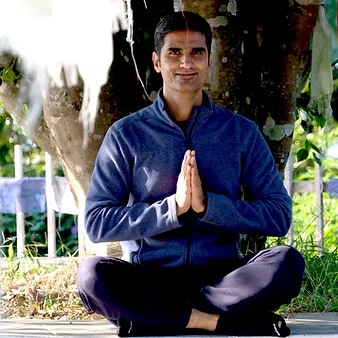
Hardik Mehta
Hardik is an E-RYT 500 & YACEP (Yoga Alliance Continuing Education Provider), Yoga Alliance, USA. He has been practicing yoga for the last 9 years. Prior to finding his true calling in Yoga, he was working with various corporates for 12 years in the Retail and eCommerce sector.