
Common Yoga Mistakes Beginners Make and How to Avoid Them
by Hardik Mehta

Starting yoga can feel both exciting and slightly overwhelming. There are new poses to learn, unfamiliar breathing techniques to understand, and often a temptation to make your practice look like the one you see online. But yoga is not about achieving the deepest stretch or holding the most advanced pose. It is about developing awareness, stability, mobility, breath, and a deeper connection with yourself.
For beginners, however, a few common habits can make the practice less effective—or even uncomfortable. Learning to recognise these common yoga mistakes beginners make can help you build a safer, more sustainable practice from the beginning.
These fundamentals are also important for anyone progressing toward becoming a yoga teacher. In an Advanced Yoga Teacher Training Course (YTTC), understanding alignment, anatomy, sequencing, breath, and individual differences helps practitioners move beyond simply “doing poses” and toward understanding why and how yoga is practiced.
So, whether you are practicing at home, attending your first yoga class, or preparing for deeper yoga education, here are some of the most common beginner yoga mistakes and how to correct them.
1. Trying to Perfect the Pose Instead of Understanding It
One of the biggest beginner yoga mistakes is focusing too much on how a pose looks.
Social media often presents yoga as extremely flexible bodies performing advanced asanas. This can create the impression that touching your toes, achieving a perfect split, or getting your leg behind your head is the goal.
It isn’t.
Yoga poses are tools for developing awareness and exploring movement. Two people can perform the same asana differently because their proportions, mobility, strength, previous injuries, and anatomy are different.
Instead of asking, “Does my pose look perfect?”, ask:
- Can I breathe comfortably?
- Do I feel stable?
- Am I creating unnecessary tension?
- Can I maintain awareness of my body?
- Does the pose feel appropriate for me today?
The goal is not to force your body into a shape. The goal is to understand what your body is doing.
2. Ignoring Proper Alignment
Alignment is another area where beginners can easily go wrong.
In poses such as Tadasana, Warrior II, Downward-Facing Dog, or Chaturanga, small changes in joint positioning can significantly affect how the body distributes load.
For example, beginners may allow the knees to collapse inward during standing poses or place excessive weight into the wrists during tabletop and Downward-Facing Dog.
This does not mean there is only one “perfect” alignment for every person. Rather, beginners should learn the principles of safe yoga alignment and how to adapt them according to their own bodies.
Props such as blocks, straps, blankets, and bolsters can also make certain poses more accessible while helping practitioners explore appropriate ranges of movement.
3. Holding Your Breath During Difficult Poses
Have you ever noticed yourself holding your breath while trying to balance or stretch?
It is extremely common.
Beginners sometimes concentrate so intensely on maintaining a pose that natural breathing becomes restricted. But yoga breathing is an important part of the practice—not something that should disappear when a pose becomes challenging.
Breath can help you observe tension, regulate effort, and maintain awareness.
Rather than forcing yourself to stay in a pose while holding your breath, reduce the intensity or come out of the posture. Your breath can act as useful feedback.
A simple principle to remember is:
If the pose becomes so difficult that you cannot breathe naturally, it may be time to modify it.
4. Pushing Too Hard and Too Soon
“More” does not necessarily mean “better” in yoga.
One of the most common yoga mistakes beginners make is trying to progress too quickly. A person may attend a few classes and immediately attempt advanced inversions, deep backbends, or intense flexibility work.
The body needs preparation.
Strength, mobility, coordination, balance, and body awareness develop gradually. Intelligent yoga practice generally progresses from simpler movements toward more complex ones.
This principle of progressive development is closely related to Vinyasa Krama, an approach that emphasises appropriate progression, preparation, and adapting practice to the individual. It is particularly valuable in yoga teacher education because teachers need to understand how to build practices rather than simply assemble impressive-looking poses.
Consistency will take you further than intensity.
5. Comparing Your Practice With Others
Yoga classes often include people at completely different levels.
One student may effortlessly touch the floor in Uttanasana, while another may need bent knees and a block. Someone may hold a balance for a minute, while another person is still learning how to distribute their weight.
Comparison can turn yoga into a performance.
Instead, focus on your own progress.
Perhaps your shoulders feel more relaxed than they did last month. Maybe your balance has improved. Maybe you can now sit comfortably for meditation. These changes matter.
Yoga is an individual practice, even when practiced in a group.
6. Skipping the Warm-Up
Jumping directly into intense stretches or advanced asanas is another mistake beginners should avoid.
A thoughtful yoga session usually prepares the body progressively. Gentle joint movements, dynamic movements, breath awareness, and simpler variations can help prepare the practitioner for more demanding postures.
For example, before attempting deeper spinal extension, you may first work on gentle spinal mobility and prepare the shoulders, hips, and core.
Warm-ups do not have to be complicated. They simply need to make sense for the practice that follows.
7. Neglecting the Importance of Strength
Yoga is often associated with flexibility, but strength is equally important.
Beginners sometimes assume that they need to become more flexible before they can practice yoga properly. In reality, yoga for beginners should ideally develop a combination of mobility, stability, strength, coordination, and awareness.
Strong muscles can help support joints and create better control during movement.
Poses such as Plank, Warrior variations, Chair Pose, and controlled transitions can develop strength when practiced appropriately.
The objective is not to become extremely flexible. It is to develop a body that can move with greater control and awareness.
8. Doing the Same Practice Every Day Without Listening to Your Body
Consistency is valuable, but consistency does not mean repeating exactly the same intense routine every day.
Your energy, sleep, stress levels, recovery, and physical condition can change from day to day.
Some days may be appropriate for a stronger practice. On other days, gentle mobility, restorative yoga, pranayama, or meditation may be more suitable.
Learning to adapt your practice is an important part of developing mindful yoga practice.
Instead of asking, “What did I do yesterday?”, ask, “What does my practice need today?”
9. Treating Pain as Something to “Push Through”
There is an important difference between effort and pain.
A yoga pose may feel challenging. You may experience muscular effort, a gentle stretch, or the work required to maintain stability. But sharp, sudden, or concerning pain should not be treated as a sign that you should push harder.
If something feels wrong, stop or modify the movement.
Beginners should also inform their teacher about relevant injuries or physical limitations before class. Qualified instruction can help practitioners understand appropriate modifications.
This is one reason anatomy and functional movement are valuable components of yoga education. Sayujya Yoga’s continuing education offerings, for example, include alignment, musculoskeletal anatomy, joint and muscle assessments, props, cueing, and techniques intended to help teachers understand and reduce common problems on the mat.
10. Skipping Savasana
After a physically demanding class, it can be tempting to roll up your mat and leave.
But Savasana is not simply “lying down at the end.”
It provides an opportunity to become still, observe the effects of practice, and transition gradually from active movement to rest.
For beginners, this can also be one of the first opportunities to experience the quieter side of yoga.
So, even when you are short on time, try not to treat the final relaxation as optional.
11. Focusing Only on Asana
Perhaps the most significant misconception about yoga is that yoga is simply physical exercise.
Asana is an important part of yoga practice, but yoga encompasses much more. Breathwork, meditation, philosophy, concentration, ethical principles, self-study, and other practices contribute to the broader yogic tradition.
This becomes particularly relevant when progressing from beginner practice to formal yoga teacher training.
A teacher needs more than the ability to demonstrate a posture. They need to understand how to communicate, observe, sequence, modify, and create an environment where students can learn safely.
Sayujya Yoga’s teacher training curriculum reflects this broader approach, incorporating areas such as asana, pranayama, meditation, anatomy and physiology, yoga philosophy, teaching methodology, and sequencing.
How Beginners Can Build a Better Yoga Practice
Avoiding mistakes does not mean becoming afraid of making them. Mistakes are part of learning.
Instead, build your practice around a few simple principles:
Start slowly. Give your body time to adapt.
Prioritise awareness over appearance. A beautiful-looking pose is not necessarily an appropriate pose.
Breathe continuously. Use your breath as feedback.
Respect your body’s limits. Challenge and force are not the same thing.
Use props. Blocks, straps, blankets, and bolsters are learning tools—not signs of weakness.
Ask questions. A good teacher can help you understand why something is being done.
Progress gradually. Build the foundations before attempting advanced practices.
Most importantly, remember that yoga is a journey of learning. Your practice will change as your body, understanding, and awareness develop.
How Sayujya Yoga Connects With a Deeper Understanding of Yoga
Sayujya Yoga offers Yoga Teacher Training Courses (YTTC) designed for practitioners who want to deepen their understanding of yoga and develop the knowledge and skills required to teach.
Its 300-hour Advanced Holistic Yoga Teacher Training goes beyond asana practice, incorporating areas including pranayama, meditation, mudra, bandha, anatomy, philosophy, teaching methodology, sequencing, and therapeutic applications. The program is intended for practitioners and teachers ready to deepen their personal practice and refine their teaching abilities.
This makes the subject of beginner yoga mistakes especially relevant to yoga teacher education. Understanding why beginners struggle with alignment, breathing, progression, flexibility, strength, and body awareness is essential for anyone who wants to guide students responsibly.
A strong yoga teacher does not simply demonstrate a pose and ask everyone to copy it. They learn to observe differences between students, offer appropriate cues, introduce modifications, and build practices progressively.
That deeper perspective is what transforms yoga from simply performing postures into intentional, informed, and mindful practice.
If you’re beginning your yoga journey, don’t worry about getting everything right immediately. Learn, observe, adjust, and keep practicing. The mat is not a place to prove what your body can do—it is a place to understand it better.
About the Author
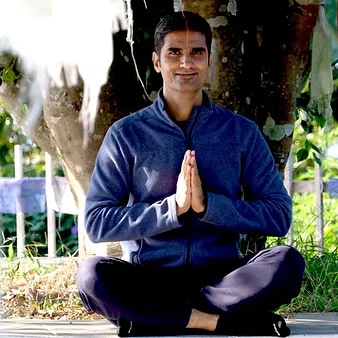
Hardik Mehta
Hardik is an E-RYT 500 & YACEP (Yoga Alliance Continuing Education Provider), Yoga Alliance, USA. He has been practicing yoga for the last 9 years. Prior to finding his true calling in Yoga, he was working with various corporates for 12 years in the Retail and eCommerce sector.