Different Types of Yoga Explained: Which One Is Right for You?
by Hardik Mehta
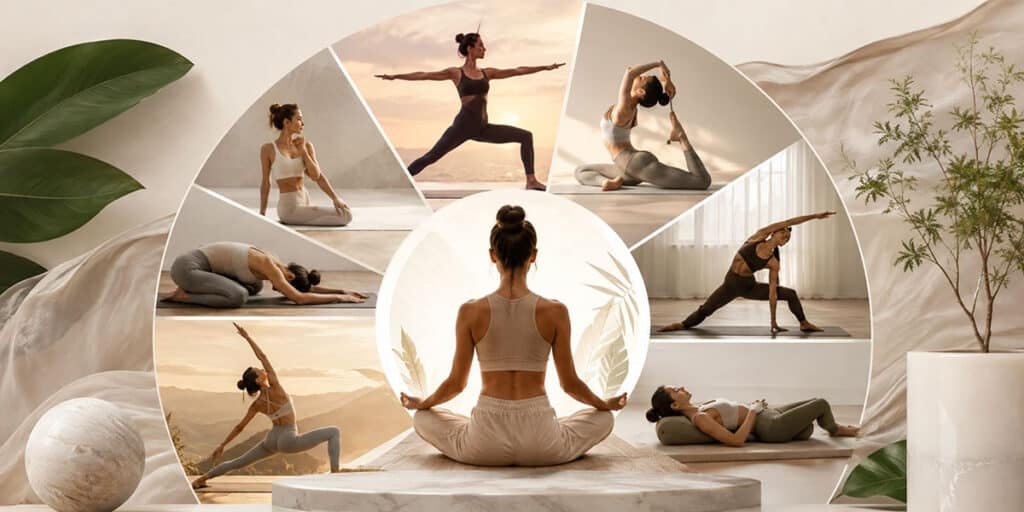
Yoga is often described as one practice, but step into a yoga studio or explore a teacher training program and you quickly discover that there are many different types of yoga. Hatha, Vinyasa, Ashtanga, Iyengar, Yin, Restorative, Kundalini and Power Yoga can all look and feel very different.
So, which type of yoga is right for you?
The answer depends on your experience, physical needs, lifestyle and what you want to gain from your practice. Some styles are slow and grounding, while others are energetic and physically demanding. Some emphasize alignment, while others focus more strongly on meditation, breathwork or deep relaxation.
Understanding the different types of yoga can help you choose a practice that feels sustainable rather than simply following the most popular style.
What Are the Different Types of Yoga?
Although the styles may differ, most yoga practices connect movement, breath, and awareness. The experience, pace, and emphasis can vary considerably between traditions and even between individual classes.
Here are some of the most commonly practiced yoga styles and what makes each one unique.
1. Hatha Yoga: A Strong Foundation
Hatha Yoga is one of the best-known forms of yoga and is often recommended for people who want to build a strong foundation.
In a typical Hatha class, postures are practiced at a slower or moderate pace, allowing students time to understand alignment, breathing, and body awareness. Depending on the teacher, a session may include asana, pranayama, relaxation, and meditation.
Who is Hatha Yoga best for?
Hatha can be a great choice if you:
- Are new to yoga
- Want to understand basic yoga postures
- Prefer a slower-paced practice
- Want to improve flexibility and body awareness
- Enjoy combining movement with breathwork
It is also useful for experienced practitioners who want to return to the fundamentals.
Best suited for: Beginners, foundation-building, and mindful movement.
2. Vinyasa Yoga: Move With Your Breath
If you enjoy movement, rhythm, and variety, Vinyasa Yoga may be the right choice.
Vinyasa connects physical postures through flowing sequences, with movement coordinated with the breath. Classes can range from gentle to highly energetic, depending on the teacher and sequence.
Unlike a fixed sequence, Vinyasa classes often allow teachers to create different flows and themes. This makes each session feel fresh and dynamic.
Who is Vinyasa Yoga best for?
Consider Vinyasa if you:
- Enjoy continuous movement
- Want a more energetic yoga practice
- Like variety rather than repetition
- Want to develop strength, mobility, and coordination
- Enjoy connecting breath with movement
If you are completely new to yoga, beginning with a foundational or beginner-level class can help you learn the basic postures before moving into faster flows.
Best suited for: Active practitioners who enjoy dynamic movement.
3. Ashtanga Yoga: Discipline and Structure
Ashtanga Yoga is known for its structured approach and progressive series of postures. Unlike a free-form flow class, Ashtanga follows established sequences.
The consistent structure can make the practice particularly appealing to people who enjoy discipline, routine, and measurable progression.
It can also be physically demanding, so developing a solid foundation before attempting advanced sequences is important.
Who is Ashtanga Yoga best for?
Ashtanga may appeal to you if you:
- Enjoy routine and structure
- Like challenging physical practices
- Prefer repeating sequences
- Want to develop discipline
- Enjoy tracking your progress over time
Best suited for: Experienced practitioners and people who thrive on structure and consistency.
4. Iyengar Yoga: Precision and Alignment
Iyengar Yoga, developed by B.K.S. Iyengar, places considerable emphasis on precision, alignment, and understanding the details of each posture.
Props such as blocks, straps, bolsters and chairs may be used to support the body and help students work more effectively within a posture. Poses are often held for longer periods, allowing practitioners to explore alignment carefully.
Who is Iyengar Yoga best for?
This style can be particularly appealing if you:
- Want to improve alignment
- Like detailed instruction
- Want to understand yoga postures more deeply
- Prefer a slower, methodical approach
- Appreciate the use of props
Best suited for: Alignment-focused practitioners, beginners who enjoy technical learning and those wanting a deeper understanding of asana.
5. Yin Yoga: Slow Down and Go Inward
In a world that constantly encourages us to move faster, Yin Yoga offers an opportunity to slow down.
Yin generally consists of floor-based postures held for longer periods. Rather than moving quickly between poses, practitioners are encouraged to remain still, observe sensations and work patiently with the body.
The practice can feel very different from dynamic yoga styles because stillness becomes an important part of the experience.
Who is Yin Yoga best for?
Yin may suit you if you:
- Feel mentally overstimulated
- Prefer slow and quiet practices
- Want to complement an active fitness routine
- Enjoy meditation and introspection
- Want to spend more time exploring individual postures
Best suited for: Relaxation, mindful movement and practitioners who enjoy stillness.
6. Restorative Yoga: The Practice of Deep Rest
Restorative Yoga takes relaxation even further.
The body is supported with props so that postures can be maintained comfortably for extended periods. Instead of focusing on intensity or physical challenge, the practice creates space for rest and conscious relaxation.
Who is Restorative Yoga best for?
It may be suitable for people who:
- Want a deeply calming practice
- Have demanding schedules
- Prefer gentle movement
- Want to complement more active yoga styles
- Enjoy meditation and relaxation
Best suited for: Rest, recovery and cultivating a calmer state of mind.
7. Kundalini Yoga: Breath, Awareness and Energy
Kundalini Yoga combines physical postures with practices such as breathwork, meditation, mantra and focused awareness.
The experience can be more spiritual and inward-focused than a purely physical yoga class. Practices may vary significantly depending on the lineage and teacher.
Who is Kundalini Yoga best for?
It may appeal to practitioners who:
- Are interested in meditation and mantra
- Want to explore yoga beyond physical postures
- Enjoy breath-centered practices
- Are curious about traditional yogic concepts
- Want a more introspective experience
Best suited for: Practitioners interested in breath, meditation, mantra and deeper dimensions of yoga.
8. Power Yoga: A More Athletic Approach
Power Yoga generally uses yoga postures in a vigorous, fitness-oriented format. Classes can involve continuous movement, strength-building sequences and challenging transitions.
Because Power Yoga varies from teacher to teacher, the intensity can differ considerably.
Who is Power Yoga best for?
It can be a good option if you:
- Want a physically challenging practice
- Enjoy strength-focused workouts
- Prefer faster-paced sessions
- Like combining fitness with yoga
- Already have some familiarity with basic postures
Best suited for: Fitness-oriented practitioners looking for a vigorous yoga session.
Which Type of Yoga Is Right for You?
There is no single “best” yoga style. The right choice depends on why you want to practice yoga.
|
Your Goal |
Yoga Style to Explore |
|
New to yoga |
Hatha |
|
Build a foundation |
Hatha / Iyengar |
|
Enjoy flowing movement |
Vinyasa |
|
Want structure and discipline |
Ashtanga |
|
Improve alignment |
Iyengar |
|
Slow down and become more mindful |
Yin |
|
Deep relaxation |
Restorative |
|
Explore mantra and meditation |
Kundalini |
|
Want a vigorous workout |
Power Yoga |
Remember that these are starting points, not strict rules. A beginner can eventually explore Vinyasa, while an experienced practitioner may regularly return to Hatha or Restorative Yoga.
The most important question is not “Which yoga style is the best?” but “Which practice can I connect with and sustain?”
Can You Practice More Than One Type of Yoga?
Absolutely.
Your yoga practice does not have to fit into a single category.
For example, you might practice Vinyasa when you want movement, Yin when you want stillness and Hatha when you want to refine your foundations. Combining complementary practices can create a more balanced approach to yoga.
This is particularly relevant for yoga teachers. Understanding different yoga styles and techniques allows teachers to recognize that students have different bodies, goals, experiences and learning preferences.
Why Learning Different Yoga Styles Matters for Teachers
For someone pursuing yoga teaching professionally, knowing the names of different yoga styles is only the beginning.
A good yoga teacher needs to understand the principles behind different approaches and learn how to communicate them responsibly. This includes understanding asana, pranayama, meditation, sequencing, alignment and the broader philosophy of yoga.
This is one reason comprehensive Yoga Teacher Training Courses (YTTC) can be valuable. Teacher training allows practitioners to move beyond simply performing postures and begin understanding how yoga can be taught, adapted and communicated to different students.
As students currently explore these concepts through the Advanced YTTC, learning about different approaches to yoga can provide a broader perspective on how diverse the practice truly is.
Explore Yoga Teacher Training with Sayujya Yoga
If learning about the different types of yoga has made you curious about going deeper, Sayujya Yoga offers a pathway for practitioners who want to explore yoga through teacher training.
Sayujya Yoga is a Yoga Alliance-affiliated yoga school based in Mumbai and offers Yoga Teacher Training programs, including 200-hour and 300-hour programs in locations such as Mumbai, Goa, Dharamshala along with short yoga courses.
This makes the connection with the topic particularly relevant. Exploring Hatha, Vinyasa, Ashtanga, Iyengar, Yin and other approaches can help practitioners understand that yoga is much broader than simply performing physical poses.
For someone considering becoming a yoga teacher, developing this broader understanding can be an important part of the journey—from practicing yoga personally to understanding how it can be taught with clarity, awareness and purpose.
Whether you are taking your first yoga class or deepening your knowledge through an advanced teacher training program, there is no need to rush toward one “perfect” style.
Try. Observe. Learn. Adapt.
The right type of yoga is ultimately the one that supports where you are today while helping you grow toward where you want to be.
About the Author
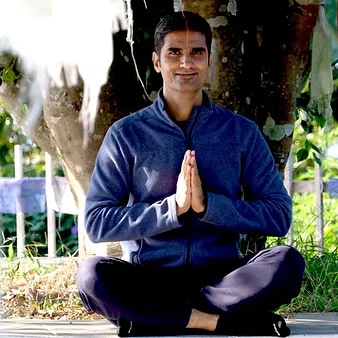
Hardik Mehta
Hardik is an E-RYT 500 & YACEP (Yoga Alliance Continuing Education Provider), Yoga Alliance, USA. He has been practicing yoga for the last 9 years. Prior to finding his true calling in Yoga, he was working with various corporates for 12 years in the Retail and eCommerce sector.