Yoga is often seen as a practice of flexibility, balance, and inner awareness. However, many people mistakenly believe that yoga requires a high level of flexibility or physical strength to begin. In reality, yoga is meant to be accessible to everyone—regardless of age, body type, or experience level. This is where yoga props play an essential role.
Yoga props are tools designed to support, stabilize, and deepen yoga postures. They help practitioners perform poses safely, maintain correct alignment, and gradually improve flexibility and strength. Whether you are a beginner or an advanced practitioner, incorporating props into your practice can transform the way you experience yoga.
In this blog, we will explore why yoga props are important, how they enhance your practice, and why they are widely used in modern yoga training programs.
What Are Yoga Props?
Yoga props are supportive tools used to assist practitioners in achieving proper alignment, balance, and comfort in yoga poses. They make poses more accessible and help prevent strain or injury.
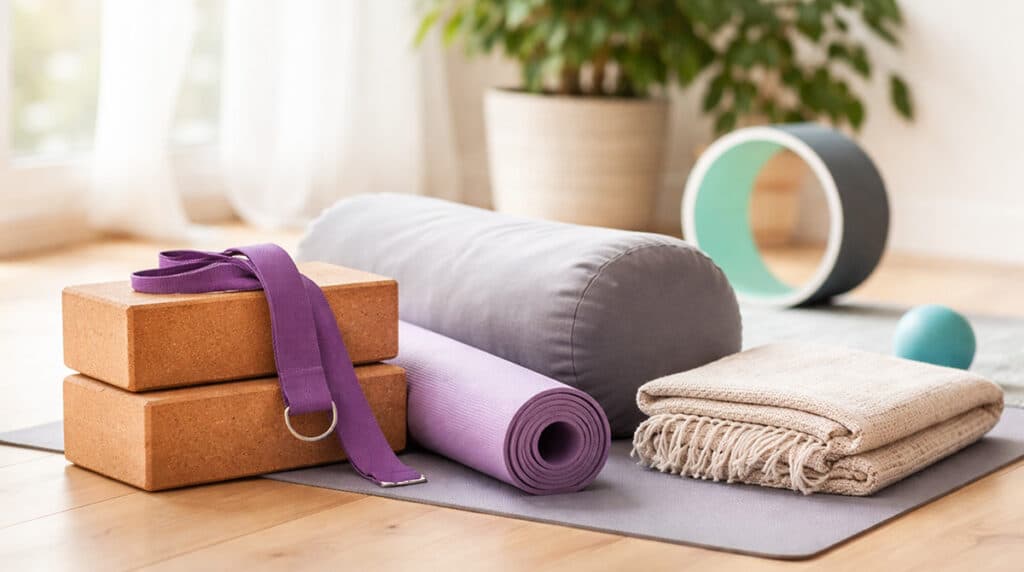
Common yoga props include:
- Yoga blocks
- Yoga straps or belts
- Yoga bolsters
- Blankets
- Yoga wheels
- Chairs
These props are widely used in yoga styles such as Iyengar Yoga, restorative yoga, and even in modern vinyasa or hatha classes. Instead of making yoga “easier,” props actually make yoga smarter and safer.
Why Yoga Props Are Important
1. Improve Alignment and Posture
Proper alignment is one of the most important aspects of yoga practice. Without correct alignment, practitioners may unknowingly place strain on joints, muscles, or ligaments.
Yoga props help maintain correct posture by supporting the body in poses. For example:
- A yoga block can bring the floor closer in poses like Triangle Pose.
- A strap helps maintain shoulder alignment in stretches.
- A bolster supports the spine during restorative poses.
By using props, practitioners can focus on precision and stability, which ultimately improves overall body awareness.
2. Make Yoga Accessible for Everyone
One of the greatest benefits of yoga props is accessibility. Not everyone can touch their toes or perform deep stretches when they begin yoga. Props bridge the gap between the body’s current ability and the pose’s ideal form.
For beginners, props allow them to:
- Safely enter poses without forcing flexibility
- Build confidence in their practice
- Experience the benefits of yoga without discomfort
For people with limited mobility, injuries, or stiffness, props provide a safe way to practice yoga without strain.
3. Prevent Injuries
Yoga is generally safe, but incorrect alignment or over-stretching can lead to injuries.
Yoga props help prevent injuries by:
- Reducing pressure on joints
- Supporting weak or recovering muscles
- Allowing gradual progression into deeper poses
For instance, a bolster placed under the hips during a forward fold can prevent overstretching the lower back. Similarly, blocks can reduce strain in standing poses.
Using props encourages mindful and controlled movement, which is essential for long-term yoga practice.
4. Help Practitioners Hold Poses Longer
Holding poses for a longer duration can deepen the physical and mental benefits of yoga. However, maintaining certain poses without support can be challenging.
Yoga props allow practitioners to stay in poses longer by reducing muscular strain.
Examples include:
- Bolsters in restorative poses
- Blankets under knees or shoulders
- Blocks supporting the hips or hands
This support allows the body to relax while still receiving the therapeutic benefits of the pose.
5. Support Restorative and Therapeutic Yoga
In restorative yoga, the focus is on relaxation, recovery, and nervous system balance. Props are essential in this style of practice.
Bolsters, blankets, and blocks support the body in gentle poses that allow complete relaxation.
Benefits include:
- Stress reduction
- Improved circulation
- Better sleep quality
- Nervous system recovery
These supportive poses help the body release tension while promoting deep relaxation.
6. Help Advanced Practitioners Deepen Their Practice
Many people think yoga props are only for beginners, but even experienced practitioners use them.
For advanced yogis, props can:
- Intensify stretches
- Improve alignment precision
- Assist in learning complex poses
For example:
- A strap can deepen hamstring stretches.
- A block can assist in arm balance training.
- A wall or chair can help with inversions.
Props become tools for refinement and exploration, not limitations.
7. Enhance Mind-Body Awareness
Yoga is not just about physical poses—it is about connecting the mind and body.
Props encourage practitioners to slow down and become more aware of their movements. By supporting the body in a pose, props allow practitioners to focus on:
- Breath awareness
- Muscle engagement
- Alignment details
This mindful approach enhances the overall meditative aspect of yoga practice.
Common Yoga Props and Their Benefits
Yoga Blocks
Yoga blocks are among the most commonly used props. They help bring the ground closer and support the body in standing, seated, and balancing poses.
Benefits:
- Improves alignment
- Provides stability
- Makes difficult poses more accessible
Yoga Straps
Straps are long belts used to extend the reach of the arms.
Benefits:
- Helps with flexibility training
- Supports shoulder and hamstring stretches
- Prevents overstretching
Yoga Bolsters
Bolsters are firm cushions used mainly in restorative yoga.
Benefits:
- Supports the spine
- Allows deep relaxation
- Reduces pressure on joints
Blankets
Yoga blankets provide cushioning and warmth.
Benefits:
- Protects sensitive joints
- Supports the neck or back
- Improves comfort in seated poses
The Role of Yoga Props in Yoga Teacher Training
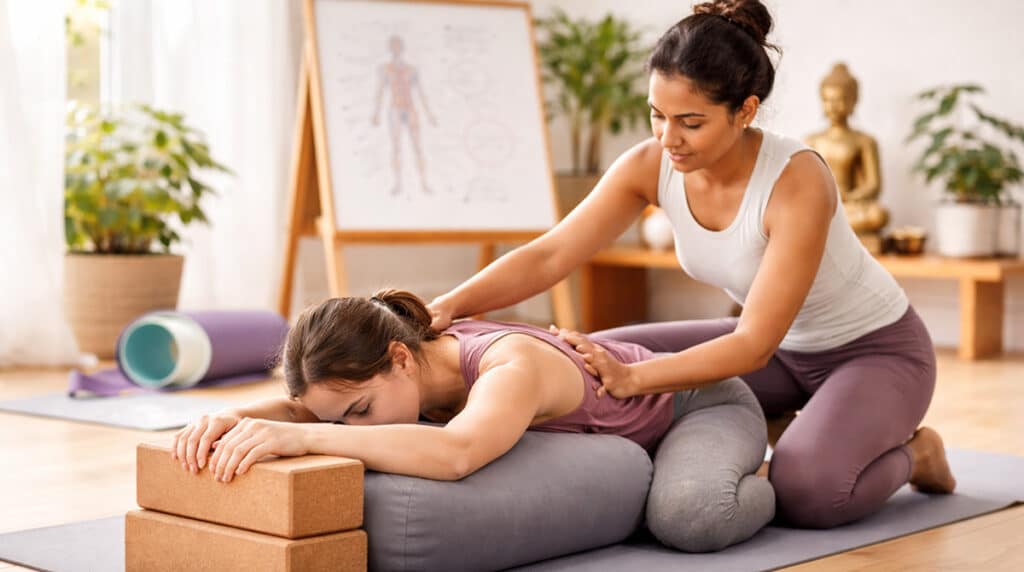
For those who want to teach yoga, understanding how to use props effectively is extremely important. Proper use of props allows teachers to guide students of all abilities safely.
In professional yoga training programs, trainees learn:
- How to modify poses using props
- Alignment principles for different body types
- Safe teaching methods for beginners and advanced practitioners
Learning these skills ensures that yoga teachers can create inclusive and safe classes for everyone.
Learning Yoga the Right Way with Sayujya Yoga
If you are passionate about yoga and want to deepen your knowledge, professional training can make a significant difference.
Sayujya Yoga, one of the best yoga institutes in Mumbai, offers structured Yoga Teacher Training programs designed for individuals who want to understand yoga beyond basic practice.
These programs focus on:
- Traditional yoga philosophy
- Proper alignment and posture techniques
- Safe use of yoga props in teaching
- Anatomy and injury prevention
- Practical teaching experience
Learning how to use props effectively is an essential part of becoming a confident yoga instructor. Training programs like the ones offered at Sayujya Yoga help aspiring teachers develop the skills needed to guide students safely and professionally.
Whether you want to expand your personal practice or pursue a teaching path, structured training provides a deeper understanding of yoga principles and techniques.
Final Thoughts
Yoga props are powerful tools that make yoga more accessible, safe, and effective for practitioners at all levels. Rather than being a shortcut, props help build strong foundations, improve alignment, and deepen awareness in each pose.
From beginners seeking support to advanced yogis refining their practice, yoga props enhance the experience in countless ways. They allow practitioners to explore yoga with patience, mindfulness, and confidence.
As yoga continues to grow worldwide, understanding the proper use of props—especially through structured training programs—can greatly enhance both personal practice and teaching skills.
By embracing these supportive tools, practitioners can experience yoga in its most inclusive, safe, and transformative form.
Hardik Mehta
Hardik is an E-RYT 500 & YACEP (Yoga Alliance Continuing Education Provider), Yoga Alliance, USA. He has been practicing yoga for the last 9 years. Prior to finding his true calling in Yoga, he was working with various corporates for 12 years in the Retail and eCommerce sector.