
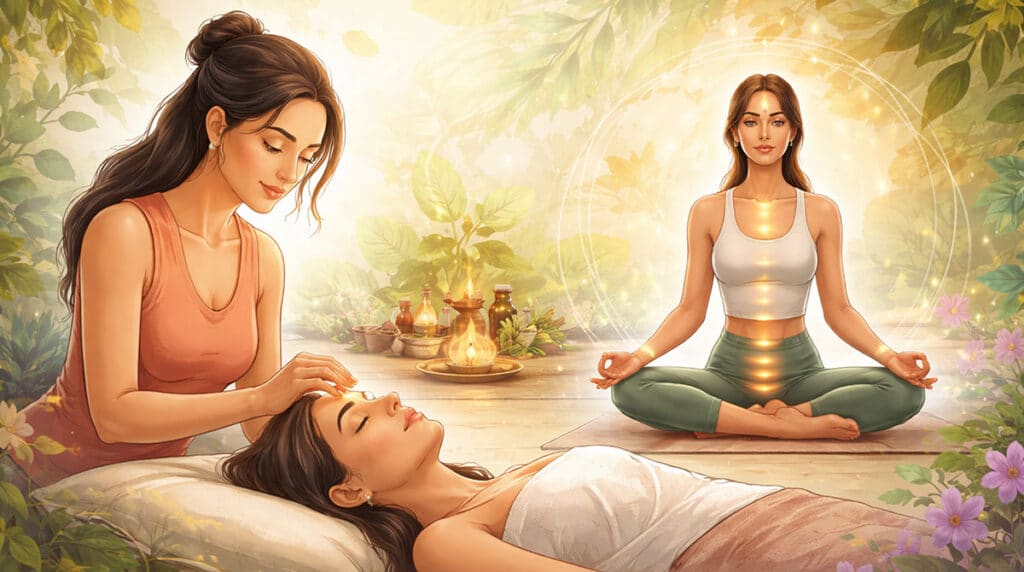
Yoga is not only about physical postures. It is a holistic system designed to balance the body, mind, and energy. As yoga continues to evolve globally, many teachers are looking for deeper ways to support their students beyond traditional asana practice. One powerful yet often overlooked approach is Marma Therapy.
Marma Therapy is rooted in ancient Ayurvedic knowledge and focuses on specific energy points in the body that influence physical and mental health. When yoga teachers understand these vital points, they can enhance their teaching, support healing, and help students experience yoga at a deeper level.
In this blog, we will explore what Marma Therapy is, its connection with yoga, and why learning Marma Therapy can be highly valuable for yoga teachers.
Understanding Marma Therapy
Marma Therapy originates from Ayurveda, the traditional healing system of India that is thousands of years old. In Ayurvedic texts, “Marma” refers to vital energy points in the body where muscles, veins, ligaments, bones, and joints meet.
There are 107 Marma points described in classical Ayurvedic literature. These points are believed to control the flow of Prana (life energy) throughout the body.
When these points are gently stimulated using touch, pressure, oils, or awareness, they can:
- Improve energy circulation
- Release blockages in the body
- Support emotional balance
- Promote physical healing
- Enhance overall vitality
Marma Therapy is therefore considered a subtle yet powerful healing technique that works with the body’s natural intelligence.
The Connection Between Marma Therapy and Yoga
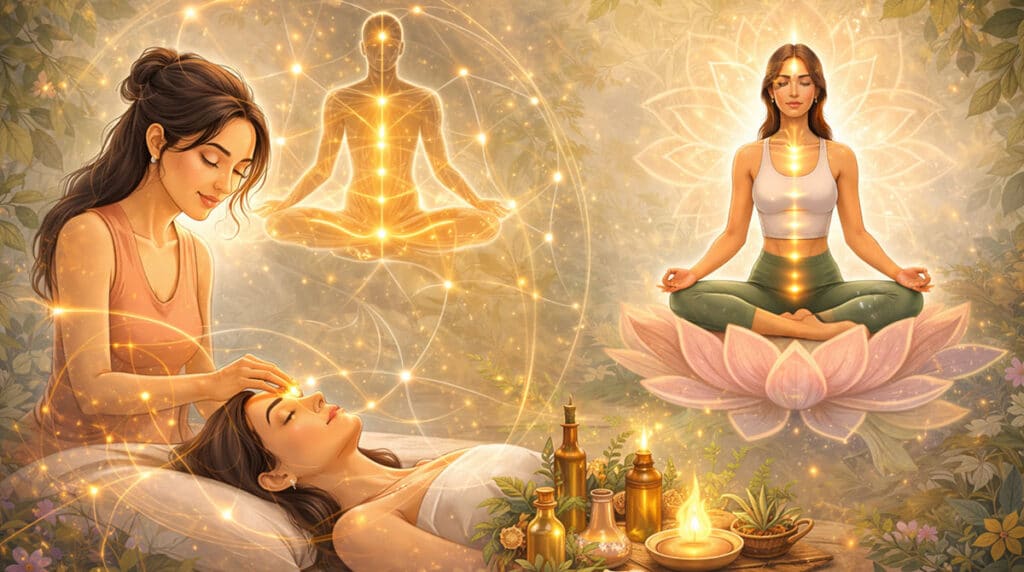
Yoga and Ayurveda have always been closely connected. Both systems aim to create harmony between body, mind, and spirit.
While yoga practices such as asana, pranayama, and meditation work to balance energy internally, Marma Therapy helps regulate energy externally through specific points in the body.
In many ways, Marma points can be understood as energy gateways that influence:
- Nervous system regulation
- Muscular relaxation
- Emotional release
- Energetic balance
Certain yoga postures naturally activate these points. For example:
- Forward bends stimulate abdominal Marma points.
- Backbends open heart-related energy centers.
- Twists influence digestive Marma points.
When yoga teachers understand Marma Therapy, they gain a deeper understanding of how and why yoga postures affect the body’s energy system.
Why Yoga Teachers Should Learn Marma Therapy
1. Deepens Knowledge of the Human Body
Many yoga teachers study anatomy and physiology as part of their training. However, Marma Therapy introduces another important dimension — energetic anatomy.
Learning Marma points allows teachers to understand:
- How energy flows through the body
- Where blockages may occur
- How yoga practices influence these points
This deeper knowledge helps teachers move beyond simply guiding postures and instead teach yoga as a complete mind-body practice.
2. Enhances the Effectiveness of Yoga Practice
When yoga teachers understand Marma points, they can adjust their teaching methods to stimulate beneficial energy centers.
For example, they can:
- Select poses that activate specific Marma points
- Guide students to bring awareness to certain areas
- Use gentle touch cues when appropriate
This approach can significantly increase the therapeutic value of yoga classes.
Students may experience:
- Improved relaxation
- Better energy flow
- Faster recovery from fatigue or stress
3. Supports a Therapeutic Approach to Yoga
Yoga therapy is becoming increasingly popular worldwide. Many students now come to yoga classes seeking relief from issues such as stress, back pain, anxiety, or poor sleep.
Marma Therapy can complement yoga therapy because it works directly with the body’s energy pathways.
By understanding Marma points, yoga teachers can:
- Support nervous system regulation
- Reduce muscular tension
- Encourage emotional release
- Improve overall well-being
This allows teachers to provide more holistic support to their students.
4. Helps Teachers Stand Out Professionally
The global yoga industry has grown significantly in recent years. With more teachers entering the field, having specialized knowledge can help teachers stand out.
Learning Marma Therapy allows yoga teachers to offer unique and deeper experiences to their students.
They may incorporate Marma awareness into:
- Yoga classes
- Workshops
- Retreats
- Teacher training programs
This additional skill set can enhance credibility and professional opportunities in the wellness industry.
5. Promotes Self-Healing for Yoga Teachers
Teaching yoga can be physically and emotionally demanding. Long hours of practice, teaching multiple classes, and holding space for students require strong personal well-being.
Marma Therapy is not only useful for helping others — it is also valuable for self-care.
Yoga teachers who learn Marma techniques can use them to:
- Reduce stress and fatigue
- Improve energy levels
- Support emotional balance
- Maintain physical health
By caring for their own well-being, teachers can show up more fully for their students.
Practical Ways Yoga Teachers Can Integrate Marma Awareness
Yoga teachers do not need to perform full Marma treatments to benefit from this knowledge. Even basic awareness of Marma points can enhance teaching.
Some simple ways to integrate this knowledge include:
- Awareness-Based Cueing
Teachers can guide students to bring attention to areas such as the heart center, navel region, or temples during certain poses.
- Breath and Energy Awareness
Encouraging students to breathe into specific areas of the body can gently stimulate Marma points.
- Relaxation and Meditation
Many Marma points respond strongly to relaxation practices. Yoga Nidra and meditation can enhance their effects.
- Intelligent Sequencing
Understanding Marma locations allows teachers to design sequences that naturally activate important energy points.
These small adjustments can significantly deepen students’ experience.
The Growing Interest in Marma Therapy
In recent years, there has been increasing global interest in traditional healing systems. As people search for natural ways to support their well-being, practices such as Ayurveda and Marma Therapy are gaining recognition.
Yoga teachers who study these systems gain a broader perspective of wellness.
Rather than viewing yoga purely as exercise, they begin to understand it as a complete lifestyle and healing science.
This integrated approach is particularly valuable in modern wellness environments where people seek deeper transformation rather than quick solutions.
Learning Marma Therapy Through Yoga Teacher Training
For yoga teachers who want to expand their knowledge, structured education is important. Proper training ensures that teachers understand:
- The locations of major Marma points
- Their energetic and physiological effects
- Safe and appropriate methods of stimulation
- The connection between Marma, yoga, and Ayurveda
Training programs that combine traditional wisdom with modern teaching methods can help yoga teachers integrate this knowledge confidently into their work.
Exploring Yoga Teacher Training with Sayujya Yoga
For those interested in deepening their understanding of yoga and related healing sciences, Sayujya Yoga offers structured Yoga Teacher Training Programs designed for aspiring and experienced teachers.
These training programs focus on building a strong foundation in traditional yoga practices, philosophy, anatomy, and holistic wellness. Through comprehensive education, teachers gain the skills needed to guide students safely and effectively.
Understanding practices such as Marma Therapy becomes especially meaningful within a broader yoga education. When teachers learn the deeper principles of energy, awareness, and holistic wellbeing, they can integrate these insights into their teaching approach.
Programs like those offered by Sayujya Yoga help practitioners move beyond surface-level practice and explore the transformative depth of yoga traditions.
For yoga teachers seeking professional growth, enrolling in a structured training program can be an important step toward developing a deeper and more impactful teaching practice.
Marma Therapy represents a powerful bridge between Ayurveda and yoga. Working with vital energy points in the body, it supports healing, balance, and vitality.
For yoga teachers, learning about Marma Therapy offers many benefits. It deepens understanding of the body’s energy system, enhances the effectiveness of yoga practices, supports therapeutic teaching, and promotes personal well-being.
As the wellness industry continues to evolve, integrating traditional knowledge with modern yoga teaching can help teachers provide more meaningful experiences for their students.
By exploring practices like Marma Therapy and pursuing comprehensive training, yoga teachers can expand their skills and contribute to the growing field of holistic wellness.
Hardik Mehta
Hardik is an E-RYT 500 & YACEP (Yoga Alliance Continuing Education Provider), Yoga Alliance, USA. He has been practicing yoga for the last 9 years. Prior to finding his true calling in Yoga, he was working with various corporates for 12 years in the Retail and eCommerce sector.