
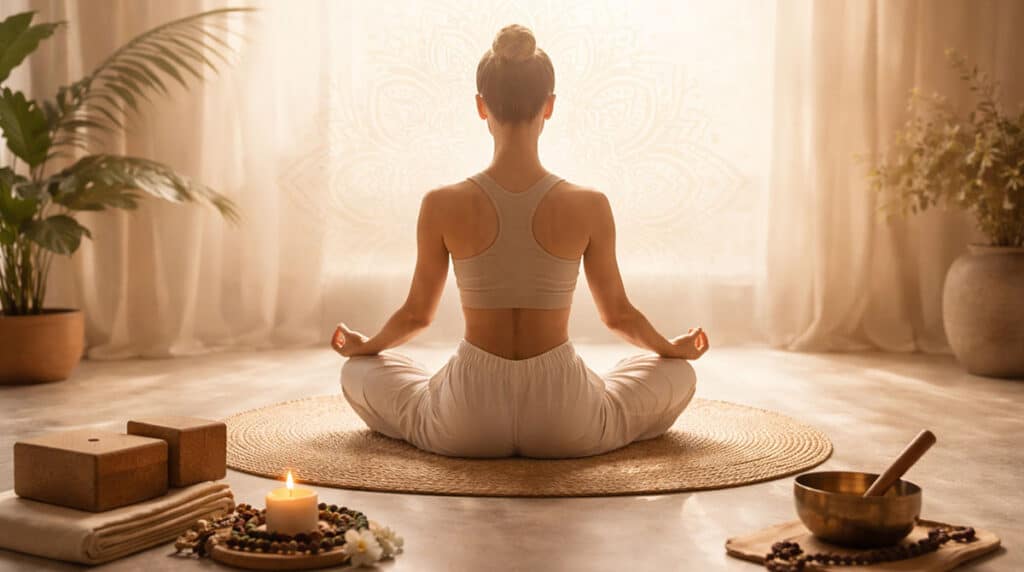
Yoga is far more than physical exercise. At its heart, it is a profound philosophy that guides how we move, breathe, think, and live. Among the many timeless teachings of yoga, one short yet powerful sutra stands out for its depth and relevance even today: “Sthiram Sukham Asanam.”
This phrase, originating from Patanjali’s Yoga Sutras, defines the true essence of an asana (posture). While modern yoga often focuses on flexibility, strength, or aesthetics, Sthiram Sukham Asanam gently reminds us that the real goal of posture practice is balance—both physically and mentally.
In this blog, we will explore the meaning of Sthiram Sukham Asanam, its philosophical roots, its practical application in modern yoga, and how understanding this sutra can transform your practice on and off the mat.
Understanding the Origin of Sthiram Sukham Asanam
Sthiram Sukham Asanam comes from Yoga Sutra 2.46, written by Sage Patanjali, the ancient compiler of classical yoga philosophy. The Yoga Sutras consist of concise aphorisms that outline the eightfold path of yoga (Ashtanga Yoga)—a holistic system designed to lead practitioners toward self-realization.
Within this system, asana is the third limb. Contrary to popular belief, Patanjali did not describe dozens of poses. Instead, he summarized the entire physical practice with just one sutra:
Sthiram Sukham Asanam
Despite its brevity, this sutra offers deep guidance on how yoga postures should be practiced and experienced.
Literal Meaning of Sthiram Sukham Asanam
To fully understand the sutra, let’s break it down word by word:
- Sthiram – Steady, stable, firm, grounded
- Sukham – Comfortable, easeful, pleasant, relaxed
- Asanam – Posture or seated position
When combined, the sutra means:
“A yoga posture should be steady and comfortable.”
This simple translation holds a profound truth: an asana is complete only when stability and ease coexist.
The Deeper Philosophical Meaning
On a deeper level, Sthiram Sukham Asanam represents the union of opposites:
- Effort and surrender
- Strength and softness
- Alertness and relaxation
If a posture is too rigid, the body becomes tense and the mind restless. If it is too relaxed, awareness fades. Yoga invites us to rest in the sweet spot between effort and ease.
This philosophy extends beyond the mat. In daily life, it teaches us how to stay grounded during challenges (sthiram) while remaining calm and adaptable (sukham).
Why Sthiram Sukham Asanam Matters in Modern Yoga
In today’s fast-paced world, yoga is often approached as a fitness routine—how deep the stretch is, how long the pose is held, or how advanced it looks. This mindset can lead to strain, injury, and burnout.
Sthiram Sukham Asanam shifts the focus inward:
- Are you breathing smoothly in the pose?
- Can you hold it without unnecessary tension?
- Does your body feel supported rather than forced?
When practiced with awareness, yoga becomes sustainable, therapeutic, and meditative, not just physically demanding.
How to Practice Sthiram Sukham Asanam on the Mat
1. Balance Effort and Ease
Every posture requires engagement, but not aggression. Activate the muscles needed for stability, while consciously relaxing areas holding excess tension.
2. Let the Breath Guide You
Steady, unbroken breathing is a key indicator of comfort. If the breath becomes strained, it’s a signal to adjust the posture.
3. Respect Individual Anatomy
Yoga is not about achieving a perfect external shape. Each body is unique, and asana should be adapted accordingly.
4. Use Props Without Guilt
Blocks, straps, bolsters, and blankets support sukham (comfort) while allowing sthiram (stability) to develop safely.
Sthiram Sukham Asanam and Meditation
Although often associated with physical postures, this sutra is especially relevant to seated meditation.
A meditative posture should:
- Support an upright spine (stability)
- Allow the body to remain relaxed and still for extended periods (comfort)
Whether seated on the floor or a chair, the aim is to create a posture that allows the mind to settle effortlessly.
Beyond the Mat: Applying the Sutra in Daily Life

The wisdom of Sthiram Sukham Asanam extends beautifully into everyday living:
- At work: Stay focused and disciplined without becoming stressed or rigid
- In relationships: Be emotionally grounded while remaining open and compassionate
- In challenges: Maintain inner stability while adapting gracefully to change
This balance is the essence of yogic living.
Common Misunderstandings About the Sutra
One common misconception is that comfort means laziness or lack of effort. In truth, sukham refers to ease without collapse.
Similarly, sthiram does not mean stiffness. It signifies alert stability, not rigidity.
True yoga lies in the dynamic balance between the two.
The Role of Sthiram Sukham Asanam in Teacher Training
In authentic yoga teacher training programs, this sutra forms the foundation of safe alignment, mindful sequencing, and ethical teaching.
Teachers trained with this philosophy learn to:
- Guide students safely
- Encourage self-awareness over performance
- Honor yoga as a holistic practice rather than a physical workout
Sthiram Sukham Asanam at Sayujya Yoga
The philosophy of Sthiram Sukham Asanam is deeply woven into every offering. Sayujya Yoga emphasizes traditional yogic wisdom blended with mindful modern practice, ensuring that students experience yoga as a transformational journey, not just a physical routine.
Whether through yoga classes, teacher training programs, or wellness initiatives, Sayujya Yoga encourages practitioners to cultivate steadiness in body, ease in breath, and clarity in mind. This approach aligns perfectly with Patanjali’s vision—where yoga becomes a sustainable, life-enhancing practice accessible to all.
For seekers looking to deepen their understanding of authentic yoga philosophy while maintaining physical and mental balance, Sayujya Yoga offers a grounded and nurturing space to grow.
Final Thoughts
Sthiram Sukham Asanam is more than a definition of posture—it is a guiding principle for conscious living. By embracing both steadiness and comfort, yoga becomes a practice of harmony rather than force.
In a world that constantly pulls us toward extremes, this ancient sutra gently reminds us to stand firm without tension and relax without losing awareness. That balance is where yoga truly begins.
At Sayujya Yoga, one of the best yoga institute in Mumbai, seekers can explore structured programs including 200-hour teacher training, short-term workshops, and philosophy-based courses that integrate traditional teachings with modern lifestyle needs, helping practitioners build a consistent, balanced, and rooted yoga practice that nurtures physical strength, mental clarity, and spiritual growth for long-term holistic well-being and transformation.
Hardik Mehta
Hardik is an E-RYT 500 & YACEP (Yoga Alliance Continuing Education Provider), Yoga Alliance, USA. He has been practicing yoga for the last 9 years. Prior to finding his true calling in Yoga, he was working with various corporates for 12 years in the Retail and eCommerce sector.