
Key Learnings from the Upanishads: Ancient Wisdom for Modern Life
by Hardik Mehta
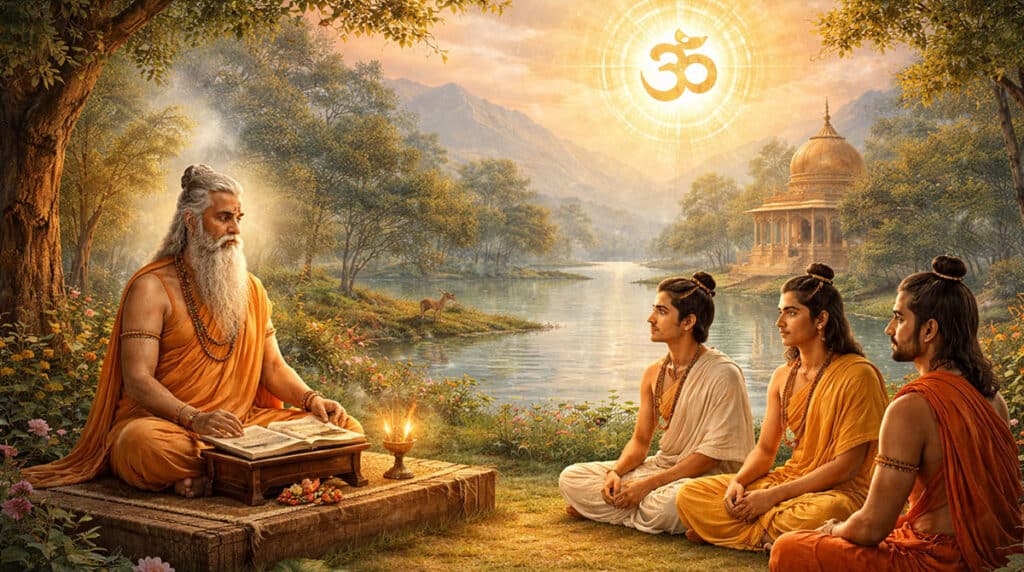
The Upanishads are among the most profound spiritual texts in the world. Written thousands of years ago as part of the Vedic tradition of India, these philosophical scriptures explore the deepest questions of human existence—Who are we? Why are we here? What is the nature of reality?
Despite their ancient origin, the teachings of the Upanishads remain highly relevant today. In a world filled with stress, constant distractions, and a search for meaning, their insights offer timeless guidance for inner peace, self-understanding, and spiritual growth.
In this blog, we will explore the key learnings from the Upanishads and understand how these teachings can inspire a balanced and meaningful life in the modern world.
What Are the Upanishads?
The Upanishads form the philosophical foundation of Vedanta, one of the most influential schools of Indian philosophy. The word Upanishad literally means “sitting down near,” referring to students sitting close to a teacher to receive spiritual knowledge.
Unlike ritual-based scriptures, the Upanishads focus on self-inquiry, consciousness, and ultimate reality. They emphasize understanding the true nature of the self rather than relying solely on external practices.
Across the various Upanishads, several core teachings appear repeatedly. These teachings are not merely philosophical ideas—they are practical insights meant to transform how we view ourselves and the world.
1. The True Self (Atman)
One of the most fundamental teachings of the Upanishads is the concept of Atman, the true self.
According to the Upanishads, the self we usually identify with—our body, thoughts, and emotions—is not our real identity. These are temporary aspects of our existence. The true self is deeper, unchanging, and eternal.
This inner self:
- Is beyond physical appearance
- Is not limited by the mind
- Exists beyond birth and death
Realizing the Atman is considered the ultimate goal of spiritual life. When a person understands their true nature, they move beyond fear, insecurity, and attachment.
In modern life, this teaching encourages us to look beyond external identities such as job titles, social roles, or achievements and connect with our deeper inner awareness.
2. The Unity of Atman and Brahman
Perhaps the most powerful idea in the Upanishads is the relationship between Atman (individual self) and Brahman (universal consciousness).
The Upanishads declare that:
Atman and Brahman are ultimately the same.
This means the consciousness within every individual is not separate from the universal reality that governs the entire universe.
One of the famous Upanishadic statements, “Tat Tvam Asi” (That Thou Art), expresses this profound truth.
This teaching has several implications:
- All beings are fundamentally interconnected.
- Divisions created by ego or identity are temporary.
- Spiritual growth comes from recognizing this unity.
In modern terms, this teaching promotes compassion, empathy, and respect for all forms of life.
3. Knowledge as the Path to Liberation
The Upanishads emphasize knowledge (Jnana) as the path to spiritual freedom.
However, this is not ordinary intellectual knowledge. Instead, it refers to self-knowledge—direct realization of one’s true nature.
According to the Upanishads, ignorance (Avidya) causes human suffering. When we mistake temporary things for permanent ones, we become attached to material possessions, social approval, or fleeting emotions.
True wisdom arises when we recognize:
- The temporary nature of the external world
- The eternal nature of consciousness
- The deeper purpose of human existence
Through meditation, contemplation, and disciplined living, a person gradually gains this knowledge.
This teaching encourages modern readers to cultivate mindfulness, reflection, and conscious living rather than blindly chasing external success.
4. Detachment and Inner Freedom
Another important learning from the Upanishads is the idea of detachment (Vairagya).
Detachment does not mean rejecting life or avoiding responsibilities. Instead, it means engaging with the world without excessive attachment or dependence.
For example:
- Enjoy success without becoming arrogant
- Face failure without losing self-worth
- Experience emotions without being controlled by them
When a person practices detachment, they develop inner stability and emotional balance.
In today’s fast-paced world, where people often feel overwhelmed by expectations and comparisons, this teaching can help cultivate mental resilience and peace of mind.
5. The Importance of Self-Inquiry
The Upanishads constantly encourage seekers to ask profound questions such as:
- Who am I?
- What is the nature of consciousness?
- What remains when everything else changes?
This process of self-inquiry helps individuals move beyond superficial understanding and explore deeper truths.
Instead of blindly accepting beliefs, the Upanishads promote direct exploration and realization.
Self-inquiry can be practiced through:
- Meditation
- Reflective journaling
- Mindful observation of thoughts and emotions
- Guidance from experienced teachers
By questioning our assumptions and perceptions, we gradually uncover deeper layers of awareness.
6. The Role of a Teacher (Guru)
The Upanishads emphasize the importance of learning under the guidance of a teacher or guru.
Since spiritual knowledge involves subtle understanding, guidance from an experienced teacher helps avoid confusion and misinterpretation.
A teacher helps the student:
- Understand complex philosophical ideas
- Apply spiritual principles in daily life
- Develop discipline and clarity in practice
This teacher-student tradition has been central to Indian spiritual culture for centuries.
Even today, structured learning environments such as yoga teacher training programs carry forward this tradition by providing systematic guidance in spiritual philosophy and practice.
7. Meditation as a Tool for Self-Realization
Meditation plays a crucial role in the teachings of the Upanishads.
While philosophy explains the nature of reality, meditation allows individuals to directly experience it.
Through meditation, practitioners learn to:
- Quiet the mind
- Observe thoughts without attachment
- Connect with deeper awareness
Regular meditation gradually reduces mental disturbances and enhances clarity, focus, and emotional balance.
Many modern wellness practices—including mindfulness and yoga—are deeply influenced by these ancient teachings.
8. Living a Balanced and Conscious Life
The Upanishads do not advocate escaping from life. Instead, they encourage individuals to live with awareness, wisdom, and balance.
This means:
- Performing duties responsibly
- Cultivating compassion and humility
- Seeking knowledge and self-improvement
- Maintaining inner peace despite external challenges
By integrating these principles into everyday life, individuals can create harmony between material success and spiritual growth.
Relevance of the Upanishads in Today’s World
Although written thousands of years ago, the teachings of the Upanishads remain incredibly relevant.
Modern society often struggles with:
- Stress and burnout
- Identity confusion
- Emotional imbalance
- A constant search for meaning
The Upanishads offer timeless guidance by encouraging:
- Self-awareness
- Inner stability
- Ethical living
- Spiritual growth
As more people explore yoga, meditation, and mindfulness, the wisdom of the Upanishads continues to inspire individuals across the world.
Learning the Wisdom of the Upanishads Through Yoga Education
Understanding the Upanishads often requires deeper study and guided learning. Many yoga education programs integrate these philosophical teachings to help students understand the roots of yogic practice.
Sayujya Yoga is one of the best yoga instiutes in mumbai. Sayujya Yoga focuses on yoga teacher training programs designed to help students explore the deeper aspects of yoga philosophy, including insights from classical texts like the Upanishads.
Their training programs emphasize:
- Traditional yogic philosophy
- Meditation and self-awareness practices
- Ethical foundations of yoga
- The connection between yoga and spiritual wisdom
By studying yoga in a structured learning environment, students can gain a deeper understanding of ancient teachings and learn how to share this knowledge responsibly with others.
For those interested in exploring the philosophical roots of yoga and expanding their understanding of spiritual traditions, such training programs provide valuable guidance.
Final Thoughts
The Upanishads are not merely ancient philosophical texts—they are guides for living a meaningful and conscious life.
Their teachings encourage us to:
- Discover our true self
- Recognize the unity of all existence
- Seek knowledge and wisdom
- Practice detachment and inner balance
- Cultivate awareness through meditation
In a world filled with distractions and constant change, the wisdom of the Upanishads reminds us that true fulfillment comes from self-understanding and inner peace.
By reflecting on these timeless teachings, we can develop clarity, compassion, and a deeper connection with ourselves and the world around us.
About the Author
Hardik Mehta
Hardik is an E-RYT 500 & YACEP (Yoga Alliance Continuing Education Provider), Yoga Alliance, USA. He has been practicing yoga for the last 9 years. Prior to finding his true calling in Yoga, he was working with various corporates for 12 years in the Retail and eCommerce sector.