

Anger is a natural human emotion. It arises when we feel threatened, unheard, or overwhelmed. In small doses, anger can even be protective. But when it becomes frequent, intense, or uncontrolled, it starts affecting our health, relationships, and overall quality of life. In today’s fast-paced world, stress, deadlines, social pressures, and constant digital stimulation often turn minor frustrations into major emotional outbursts.
This is where anger management through yoga offers a gentle yet powerful solution. Yoga does not suppress anger or label it as “bad.” Instead, it helps us understand, regulate, and healthily release anger by working on the body, breath, and mind together.
This blog explores how yoga helps manage anger, the science behind it, effective yoga practices, and how consistent practice can bring emotional balance and inner calm.
Understanding Anger and Its Impact
Anger is closely linked to the body’s stress response. When triggered, the nervous system activates the “fight or flight” mode. Heart rate increases, breathing becomes shallow, muscles tense, and stress hormones like cortisol and adrenaline flood the body.
If this response happens too often, it can lead to:
- High blood pressure
- Anxiety and irritability
- Sleep disturbances
- Digestive issues
- Weakened immunity
- Strained personal and professional relationships
Most anger management techniques focus only on mental control. Yoga, however, works at a deeper level by calming the nervous system and improving emotional awareness.
How Yoga Helps in Anger Management
Yoga is not just physical exercise. It is a holistic practice that integrates asana (postures), pranayama (breathing), and dhyana (meditation). Together, these practices help regulate emotions naturally.
1. Regulates the Nervous System
Yoga activates the parasympathetic nervous system, also known as the “rest and digest” system. This counteracts stress and helps the body relax. When the nervous system is calm, anger loses its intensity.
2. Improves Emotional Awareness
Many people react in anger because they are unaware of their emotional patterns. Yoga cultivates mindfulness, helping you notice anger as it arises, before it turns into an impulsive reaction.
3. Releases Stored Tension
Anger is often stored in the body, especially in the jaw, shoulders, chest, and hips. Yoga postures release this physical tension, reducing emotional heaviness.
4. Enhances Breath Control
Shallow, rapid breathing fuels anger. Yogic breathing techniques slow down the breath, sending calming signals to the brain and reducing emotional reactivity.
Scientific Perspective on Yoga and Anger
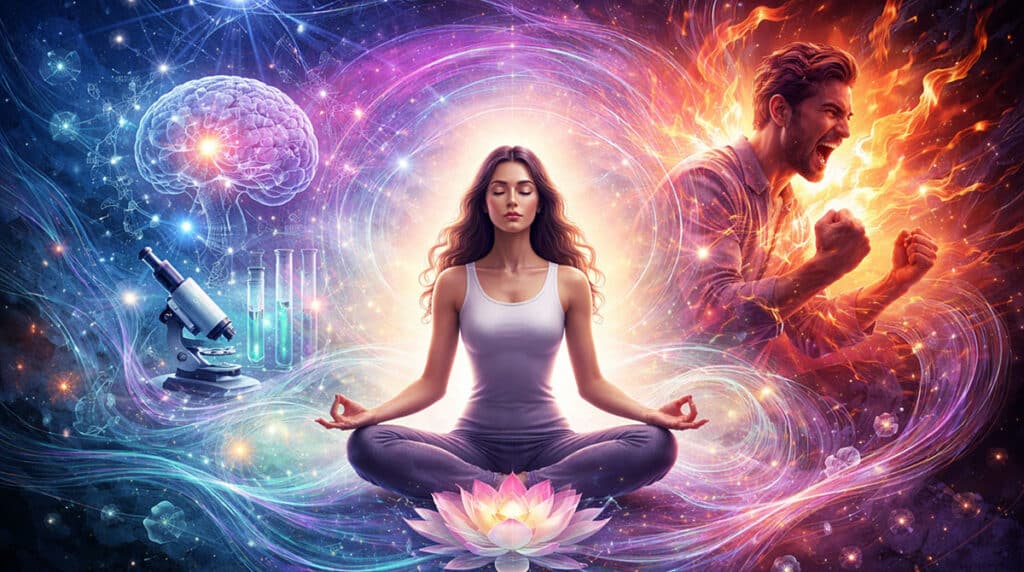
Research has shown that yoga helps reduce stress hormones and increases levels of gamma-aminobutyric acid (GABA), a neurotransmitter associated with calmness and emotional stability. Regular yoga practice has been linked to improved mood regulation, reduced aggression, and better stress management.
Yoga also improves heart rate variability (HRV), which is a key marker of emotional resilience. Higher HRV means better adaptability to stress and emotional challenges.
Best Yoga Practices for Anger Management
1. Yoga Asanas for Emotional Release
Certain yoga postures are especially effective in calming the mind and releasing suppressed emotions.
Balasana (Child’s Pose)
This grounding posture calms the nervous system and promotes introspection. It is ideal during moments of emotional overwhelm.
Adho Mukha Svanasana (Downward Facing Dog)
Helps release tension from the spine and shoulders, areas where anger often accumulates.
Bhujangasana (Cobra Pose)
Opens the chest and heart center, helping release frustration and emotional blockages.
Paschimottanasana (Seated Forward Bend)
Encourages surrender and introspection, reducing mental agitation.
Viparita Karani (Legs Up the Wall Pose)
A deeply restorative pose that reduces anxiety, fatigue, and emotional stress.
2. Pranayama (Breathing Techniques) for Anger Control
Breath is the fastest way to influence emotions. These pranayama techniques are especially useful for anger management.
Nadi Shodhana (Alternate Nostril Breathing)
Balances the left and right hemispheres of the brain, promoting emotional stability.
Sheetali and Sheetkari Pranayama
Cooling breaths that reduce heat in the body and calm intense emotions.
Bhramari Pranayama (Humming Bee Breath)
The humming sound soothes the mind, reduces irritation, and releases mental tension.
Deep Diaphragmatic Breathing
Slows the heart rate and relaxes the nervous system, helping manage anger in real time.
3. Meditation for Anger Awareness
Meditation helps you observe anger without reacting to it.
Mindfulness Meditation
By observing thoughts and emotions without judgment, you develop emotional distance and clarity.
Loving-Kindness Meditation (Metta)
Cultivates compassion toward yourself and others, reducing resentment and hostility.
Body Scan Meditation
Releases tension stored in the body and improves emotional regulation.
Even 10–15 minutes of daily meditation can significantly reduce emotional reactivity over time.
Yoga Philosophy and Anger Management
Yoga philosophy offers deep insights into emotional balance.
- Ahimsa (Non-violence) teaches non-harm not only toward others but also toward oneself.
- Santosha (Contentment) helps reduce dissatisfaction that often fuels anger.
- Svadhyaya (Self-study) encourages reflection on emotional triggers and reactions.
By integrating these principles, yoga becomes a lifestyle practice rather than just a physical routine.
Practical Tips to Use Yoga for Daily Anger Management
- Practice yoga early in the morning to set a calm tone for the day.
- Use pranayama during moments of irritation instead of reacting immediately.
- Maintain consistency rather than intensity.
- Combine physical practice with mindfulness and meditation.
- Avoid forcing poses when emotionally agitated. Gentle practice works best.
Who Can Benefit from Anger Management Through Yoga?
Yoga-based anger management is suitable for:
- Working professionals under constant stress
- Students dealing with academic pressure
- Parents managing emotional burnout
- Individuals with anxiety or mood fluctuations
- Anyone seeking emotional balance and inner peace
Yoga adapts to all ages and fitness levels, making it an accessible tool for emotional well-being.
The Role of Sayujya Yoga in Emotional Wellness
Sayujya Yoga focuses on holistic well-being by blending traditional yogic wisdom with modern lifestyle needs. The philosophy of Sayujya Yoga aligns deeply with anger management through yoga, as it emphasizes balance between body, mind, and breath.
At Sayujya Yoga, practices are designed not just for physical fitness but for emotional and mental health as well. Guided sessions, mindful sequencing, breath awareness, and meditation techniques help practitioners develop emotional resilience, self-awareness, and calmness in daily life.
For individuals seeking structured guidance in managing anger, stress, and emotional imbalance, Sayujya Yoga offers a supportive and authentic yogic approach rooted in traditional principles.
Anger is not something to be feared or suppressed. It is a signal, asking for awareness and balance. Yoga provides a safe, natural, and effective way to manage anger by calming the nervous system, increasing self-awareness, and promoting emotional stability.
Through consistent practice of yoga asanas, pranayama, meditation, and yogic philosophy, anger gradually transforms into clarity, patience, and inner strength. In a world full of triggers, yoga becomes a powerful anchor, helping you respond with awareness rather than react with intensity.
Hardik Mehta
Hardik is an E-RYT 500 & YACEP (Yoga Alliance Continuing Education Provider), Yoga Alliance, USA. He has been practicing yoga for the last 9 years. Prior to finding his true calling in Yoga, he was working with various corporates for 12 years in the Retail and eCommerce sector.