
Mysore Palace Yoga Tradition: Roots of Modern Asana Practice
by Hardik Mehta
A Regal Beginning: Where Yoga Met Royalty
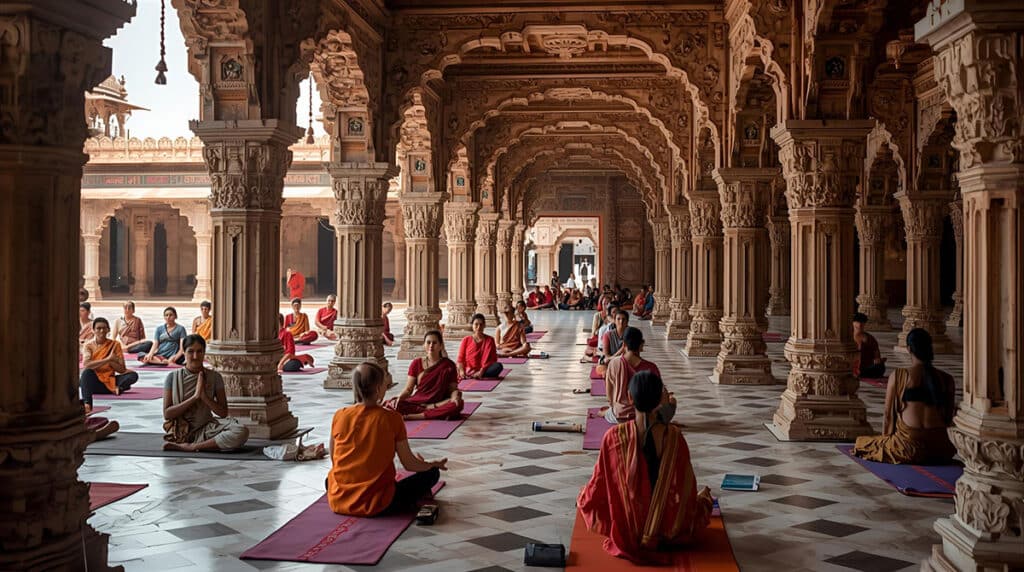
The storied halls of the Mysore Palace in Karnataka are often associated with grandeur and royal legacy. Yet beyond its ornate architecture lies a lesser-known history—a yoga tradition that shaped modern asana practice worldwide.
The book The Yoga Tradition of the Mysore Palace by N.E. Sjoman reveals how the palace became a crucible for the teachings of T. Krishnamacharya, B.K.S. Iyengar, and K. Pattabhi Jois, figures who went on to influence global yoga as we know it today.
Why Mysore Palace is a Yoga Landmark
1. Royal Patronage and Cultural Support: The Wodeyar dynasty of Mysore actively supported physical culture, scholarship, and yogic disciplines. Yoga found institutional support within the palace, allowing it to evolve systematically rather than remain purely ascetic.
2. The Sritattvanidhi Manuscript: One of the most important historical artifacts housed in the palace is the Sritattvanidhi, a 19th-century manuscript documenting 122 illustrated asanas. This text provides early visual evidence of postural yoga and bridges classical yogic concepts with emerging physical culture.
3. Bridging Tradition and Modernity: What developed in Mysore was not a linear continuation of ancient texts, but a synthesis of yoga, gymnastics, wrestling traditions, and disciplined sequencing—a foundation for modern yoga systems practiced globally today.
From Royal Gymnasium to Global Yoga Mats
Within the palace grounds existed both a Vyayama Dipika (royal gymnasium) and a dedicated yogaśāla. According to Sjoman, Krishnamacharya taught yoga within this environment, drawing upon physical culture techniques alongside classical yogic principles.
This environment shaped:
Structured asana sequences
Alignment awareness
Teacher–student lineage
Therapeutic application of yoga
These elements remain central to many contemporary yoga styles.
Why the Mysore Tradition Still Matters Today
Authentic lineage: Most modern yoga traditions trace their roots to Krishnamacharya’s Mysore teachings, making this heritage essential for practitioners seeking authenticity.
Cultural convergence: The Mysore tradition reminds us that yoga evolved through cultural interaction, not isolation—challenging simplified narratives of yoga as a static ancient practice.
Deeper Engagement with Practice: Understanding this history allows practitioners to approach asana as a disciplined, mindful, and culturally rooted practice, rather than just physical exercise.
Key Features of the Mysore Tradition
Feature | Description |
Illustrated asanas in Sritattvanidhi | A 19th-century manuscript from the palace documenting many yoga postures. |
Gymnastics/rope work influence | Some poses are shown using ropes and appear to draw from wrestling and gymnastics traditions. |
Teacher-student lineage | Krishnamacharya taught in Mysore, and his students Iyengar and Jois carried that legacy globally. |
Modern asana emphasis | The tradition emphasized physical posture (asana) as a distinct practice, perhaps more than earlier textual yoga focused on meditation. |
Practicing “Mysore-Style” Yoga Today
In modern studios, “Mysore-style” often refers to the self-paced Ashtanga method, where students practice independently under teacher guidance. This pedagogical approach has its roots in the palace-based Mysore tradition.
Understanding this lineage transforms practice from routine to purposeful discipline.
Why Tourists & Yoga Enthusiasts Should Visit Mysore?
Mysore remains a global yoga hub. Visiting the palace and studying its yoga heritage offers practitioners:
Cultural depth
Historical grounding
A richer connection to yogic lineage
For students of yoga philosophy and teacher training, this context elevates practice beyond the mat.
Connecting to Sayujya Yoga
At this juncture, let’s bring in why this history links beautifully with Sayujya Yoga. Sayujya Yoga emphasizes authentic, mindful yoga instruction grounded in tradition and personal alignment—not just trends. The yoga legacy of Mysore Palace aligns with these principles because:
It honors lineage and roots, just as Sayujya Yoga values historically grounded practice.
It emphasizes mind-body integration: the Mysore tradition’s blend of asana, physical culture, and personal practice mirrors Sayujya Yoga’s holistic view of yoga as more than exercise.
It invites practitioners to go deeper: understanding where our postures came from enriches the practice, and Sayujya supports this kind of awareness.
Sayujya Yoga’s online presence brings this legacy into the 21st century, making it accessible globally—just as the teachings from Mysore spread worldwide from a royal court.
In short: By practicing with Sayujya Yoga, you are part of a living continuum that stretches back to the palace-floors of Mysore, inviting you to ground your body, still your mind, and align with a tradition that is meaningful and dynamic.
Final Thoughts
The Mysore Palace yoga tradition offers a rare lens into how royal patronage, physical culture, and yogic discipline converged to shape modern asana.
When you practice with awareness of this lineage, you’re not merely performing postures—you’re participating in a living tradition.
At Sayujya Yoga, this legacy continues through mindful, alignment-based, and lineage-respecting practice.
About the Author
Hardik Mehta
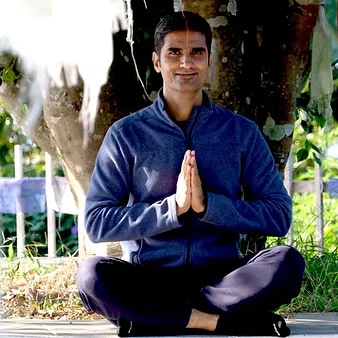
Hardik is an E-RYT 500 & YACEP (Yoga Alliance Continuing Education Provider), Yoga Alliance, USA. He has been practicing yoga for the last 9 years. Prior to finding his true calling in Yoga, he was working with various corporates for 12 years in the Retail and eCommerce sector.